Fermentation– Where Time Becomes Flavor –
Miso, soy sauce, sake, vinegar — each is a quiet collaboration between human intention and microbial time. We trace the science and craft that make Japan one of the world's great fermentation cultures.
-

The National Fungus: Koji and the Mould That Built the Japanese Kitchen
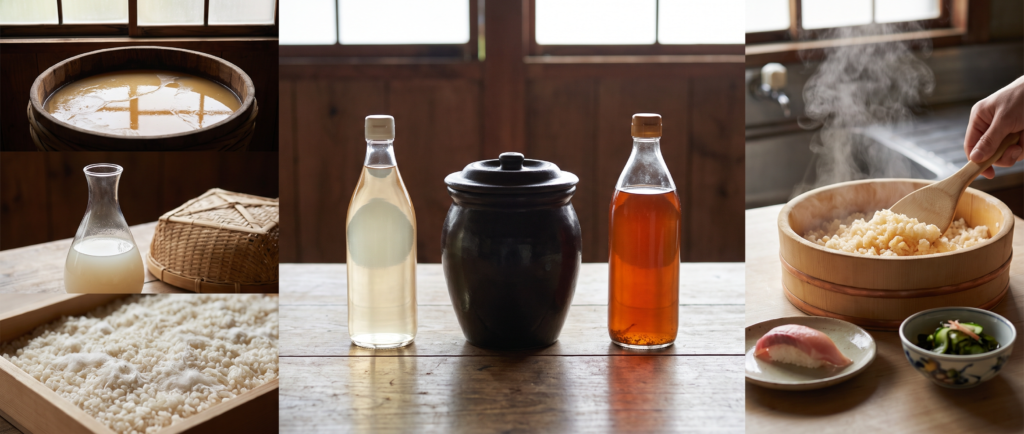
The National Fungus: Koji and the Mould That Built the Japanese Kitchen In 2006 a scientific society in Japan formally declared a mould to be the national fungus. It sounds like a joke. It is closer to a statement of fact — remove this one organism and most of what the world recognises as Japanese flavour disappears... -
The Sushi That Smells Like Cheese: Narezushi and the Thousand Years Before Vinegar
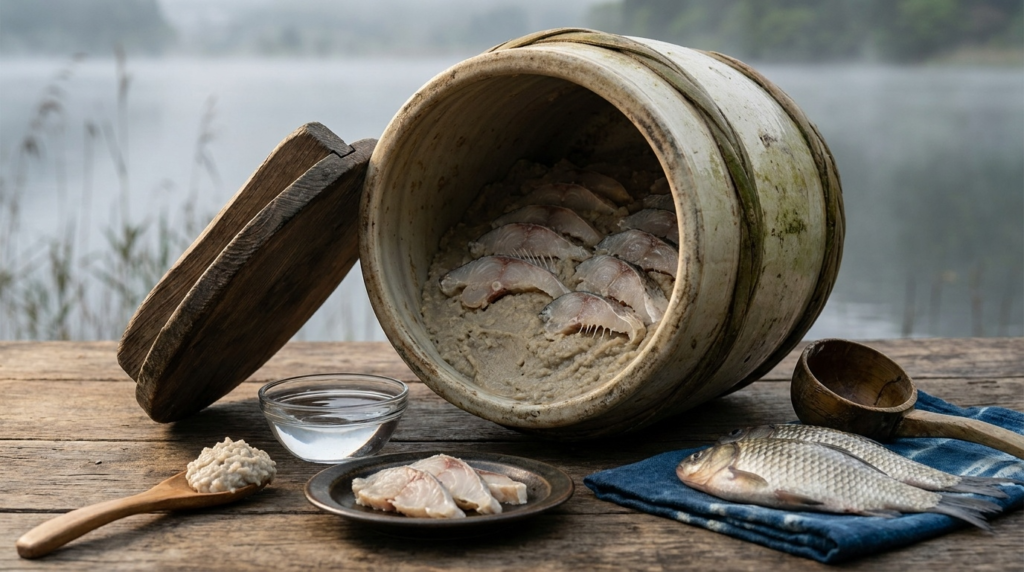
The Sushi That Smells Like Cheese: Narezushi and the Thousand Years Before Vinegar Before sushi was fast, it was slow — fish buried in rice for a year, preserved by bacteria rather than refrigeration. A handful of villages still make it. The fish they need is nearly gone. Open a jar of funazushi in a closed room and... -
Harder Than Rock Salt: Katsuobushi and the Mould That Dries a Fish From the Inside
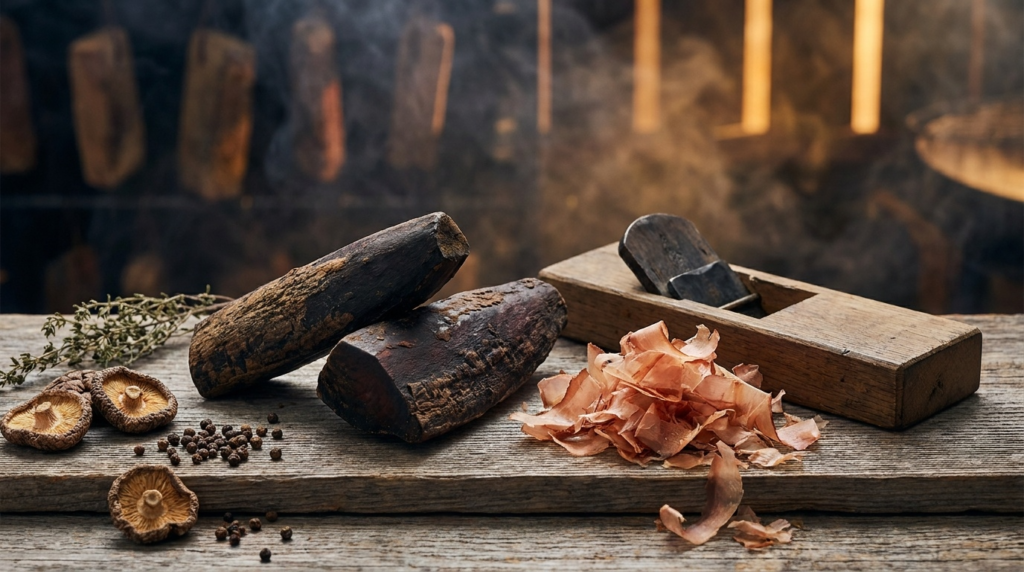
Harder Than Rock Salt: Katsuobushi and the Mould That Dries a Fish From the Inside Known in English as bonito flakes, a finished block of katsuobushi rings when you strike it. Getting there takes six months, ten fires, and four generations of a fungus that thrives in conditions close to a desert — and whose entire j... -
Amazake: The Drink Between Food and Medicine
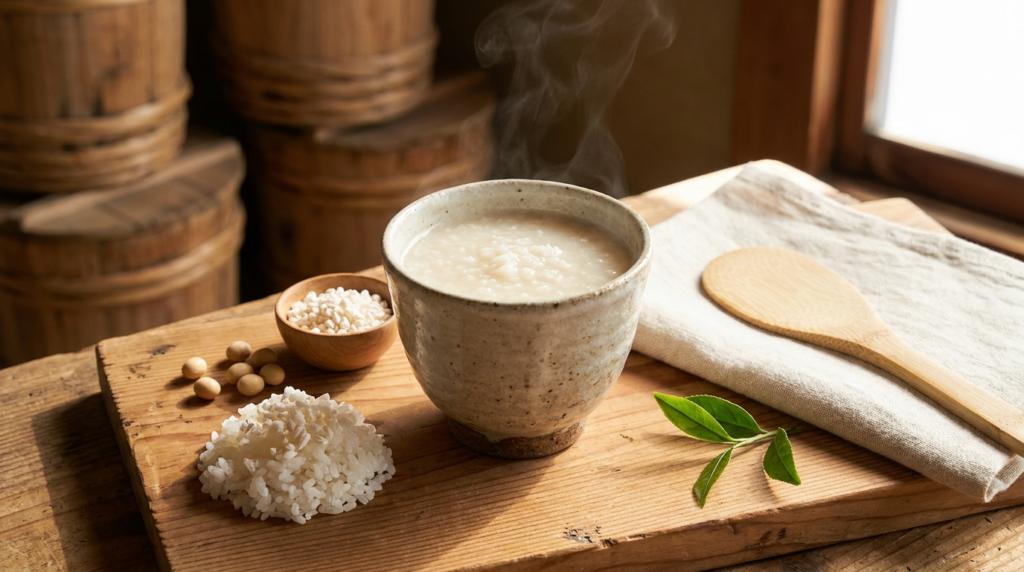
Amazake: The Drink Between Food and Medicine It is sweet, and nobody sweetened it. It is called sake, and it is usually not alcoholic. It is drunk hot at New Year shrines, and in classical poetry it is a word that means summer. Almost everything obvious about amazake turns out to be the opposite of what it looks lik... -

Rice Vinegar: The Sourness That Was Once Sake
Rice Vinegar: The Sourness That Was Once Sake Every bottle of Japanese rice vinegar is a wine that went the wrong way on purpose. Before it ever touches a grain of sushi rice, it is the end of two fermentations stacked on top of each other — and the quiet foundation beneath half the Japanese table. Pour a little int... -
Shio Koji: The Fermented Seasoning That Quietly Rewired Modern Kitchens
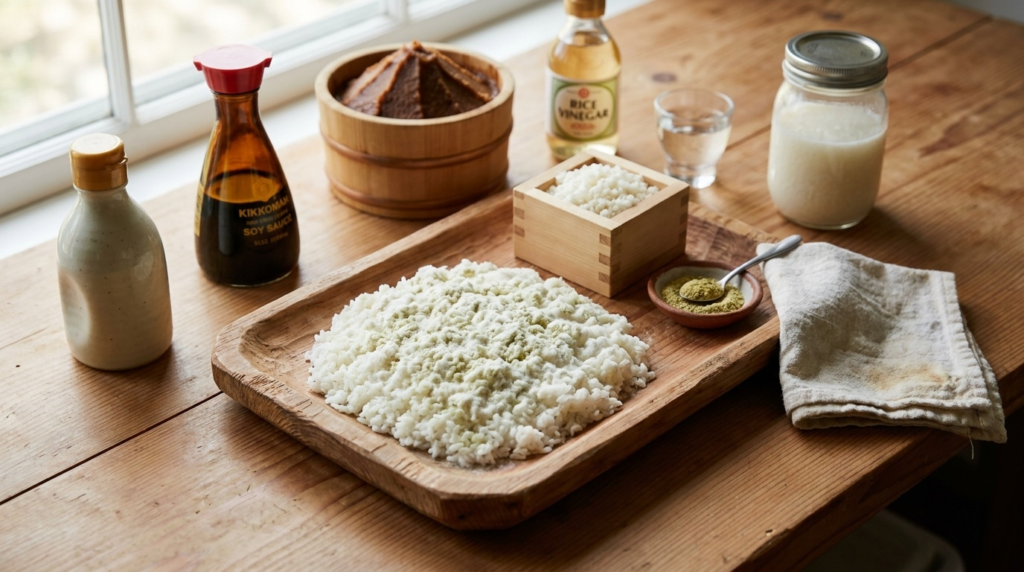
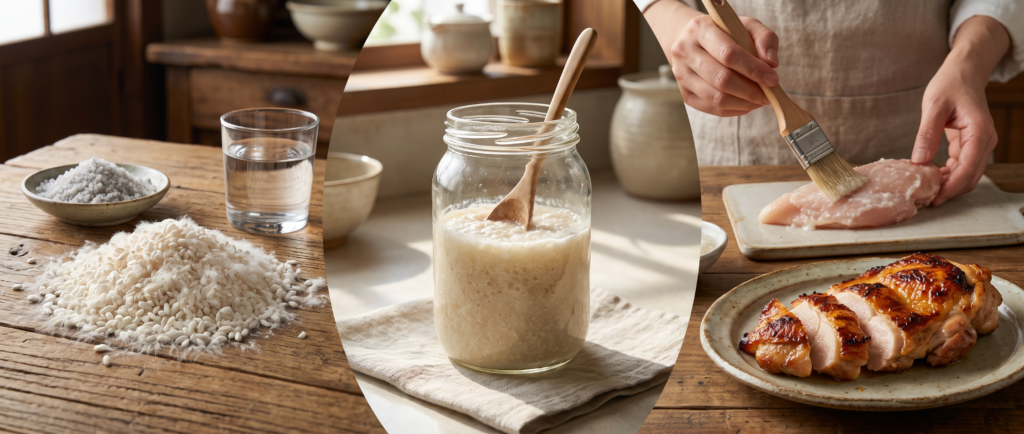
Shio Koji: The Fermented Seasoning That Quietly Rewired Modern Kitchens A cloudy paste of rice mold, salt, and water — old enough to predate refrigeration, new enough to sit on the pass at some of the best restaurants on earth. Spoon a little shio koji from the jar and it does not look like much. A pale, cloudy porr... -
The Sweetness That Fermentation Left Behind: Mirin as a Living Thing
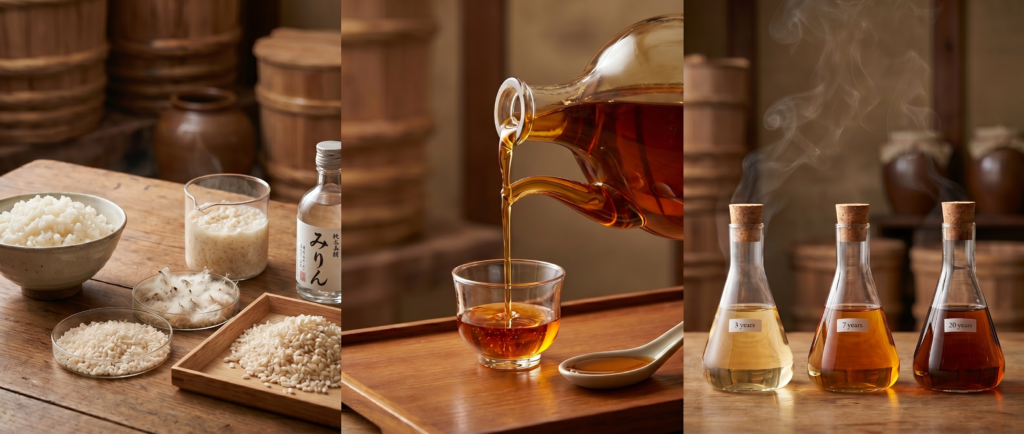
The Sweetness That Fermentation Left Behind: Mirin as a Living Thing Every other fermented staple in the Japanese kitchen is built by letting the microbes run their course. Mirin is the one that is built by stopping them halfway — a sweetness preserved rather than produced. There is a habit of mind that comes from c... -
Types of Miso: White, Red & Awase Explained
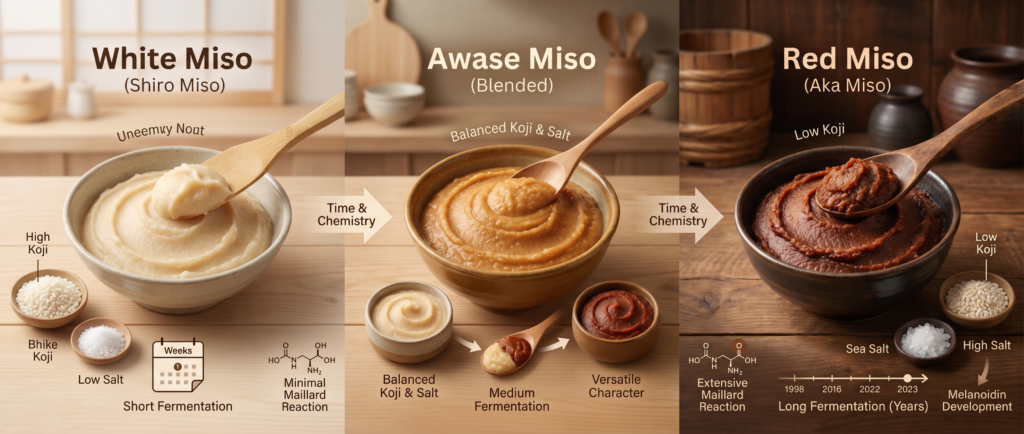
Types of Miso: White, Red & Awase Explained Everyone learns the shorthand: white miso is sweet, red miso is salty. It's true enough to be useful — and it explains nothing. The interesting question is why the same three ingredients divide into pale and dark, mild and deep, in the first place. Stand in front of th... -

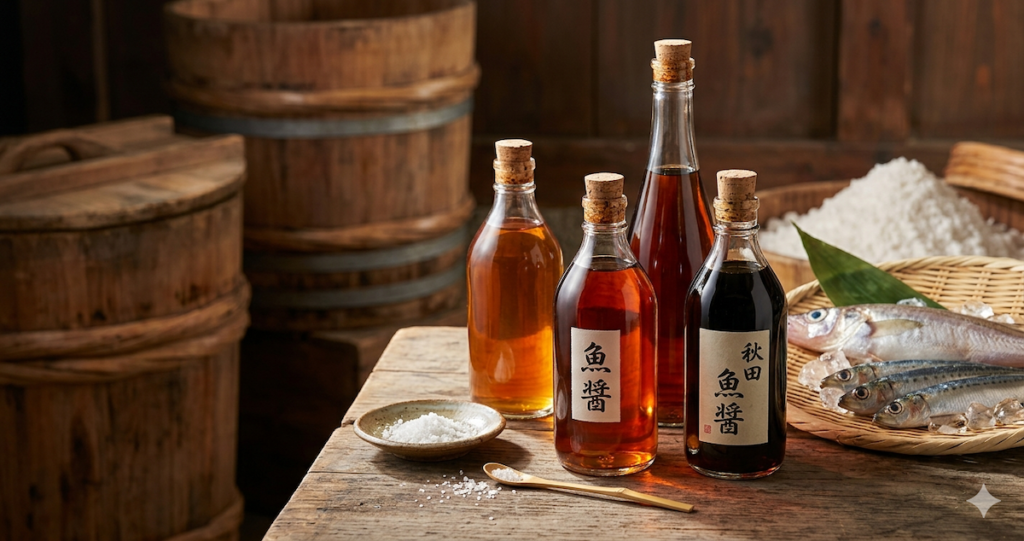
Before Soy Sauce
Before soy sauce, gyosho (fish sauce) was Japan’s essential seasoning. This guide explores the history, science, and the three major regional traditions: Shottsuru, Ishiru, and Ikanago Shoyu. -
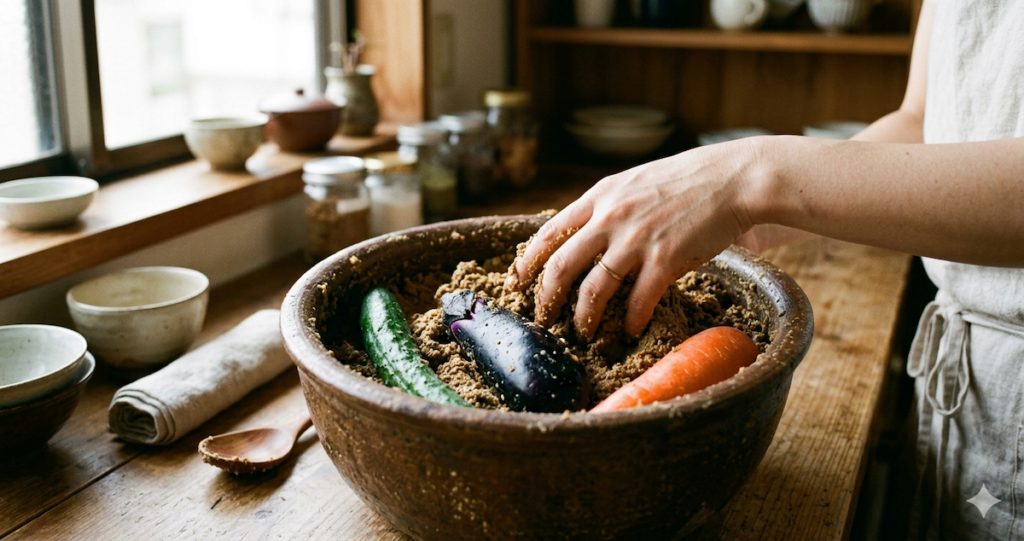
The Living Bed: A Guide to the Ancient Art of Nukazuke
This guide details the history and maintenance of nukadoko, a traditional Japanese rice bran fermenting bed, explaining how daily care creates probiotic-rich nukazuke pickles that improve with age. -
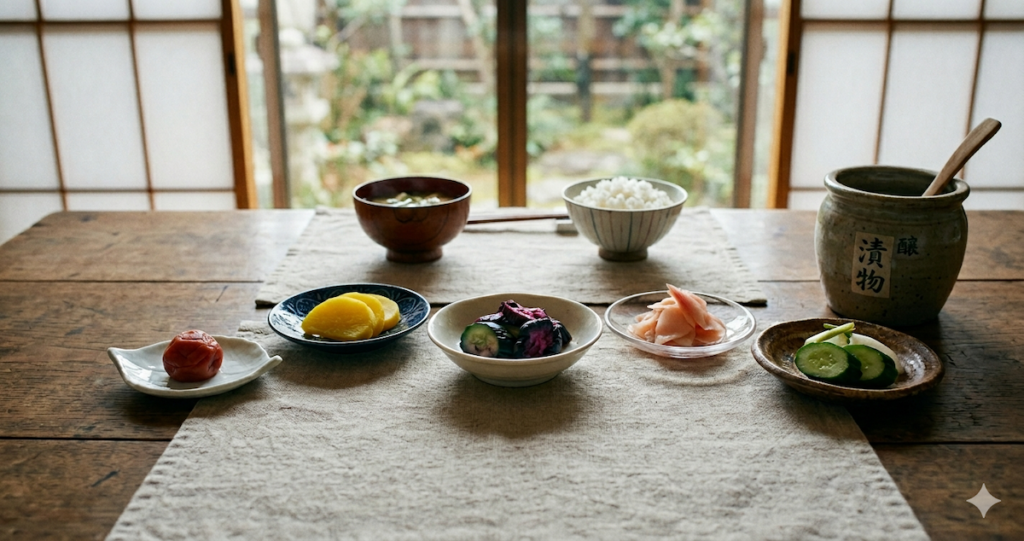
Fragrant Things: What Tsukemono Reveals About How Japan Thinks About Food
Tsukemono are diverse Japanese pickles that provide contrast, cleanse the palate, and structure meals, with regional methods and long fermentation reflecting Japan’s seasonal ingredients and food philosophy. -
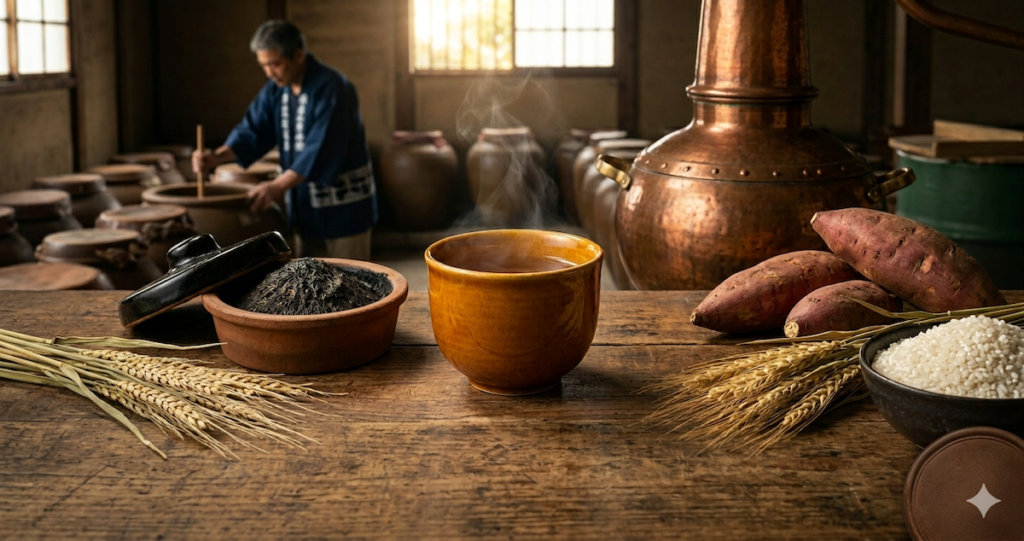
Land, Mold, and Fire: An Introduction to Shochu, Japan’s Everyday Spirit
Shōchū, Japan's most consumed spirit, surpasses sake in popularity and embodies local culture through unique fermentation with koji mold. Its diverse varieties reflect regional ingredients and traditions, inviting slow enjoyment.
12