Technique– Craft Refined Over Lifetimes –
How to draw dashi, cut fish for sashimi, cook rice with the care it deserves. We study the foundations of Japanese cooking not as instruction, but as a window into a culture that takes craft seriously.
-

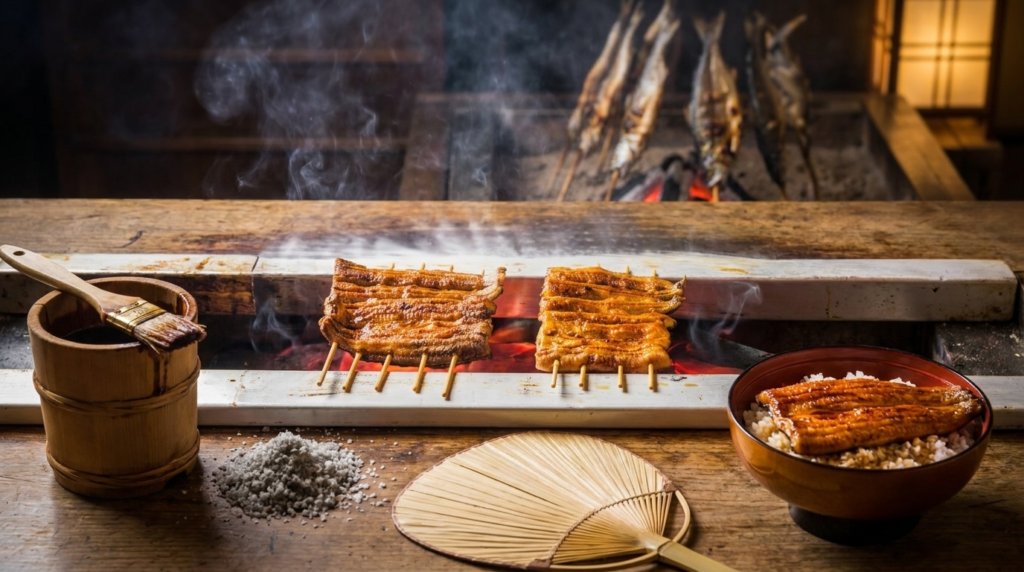
The Distance to the Fire: Japanese Grilling, Binchōtan, and the Rule Every Method Shares
The Distance to the Fire: Japanese Grilling, Binchōtan, and the Rule Every Method Shares Grilling is the one Japanese technique with nothing to hide behind. No broth, no sauce, no long marination — a piece of fish, some salt, and a heat source, and every decision you made shows up on the plate. Which is why the trad... -
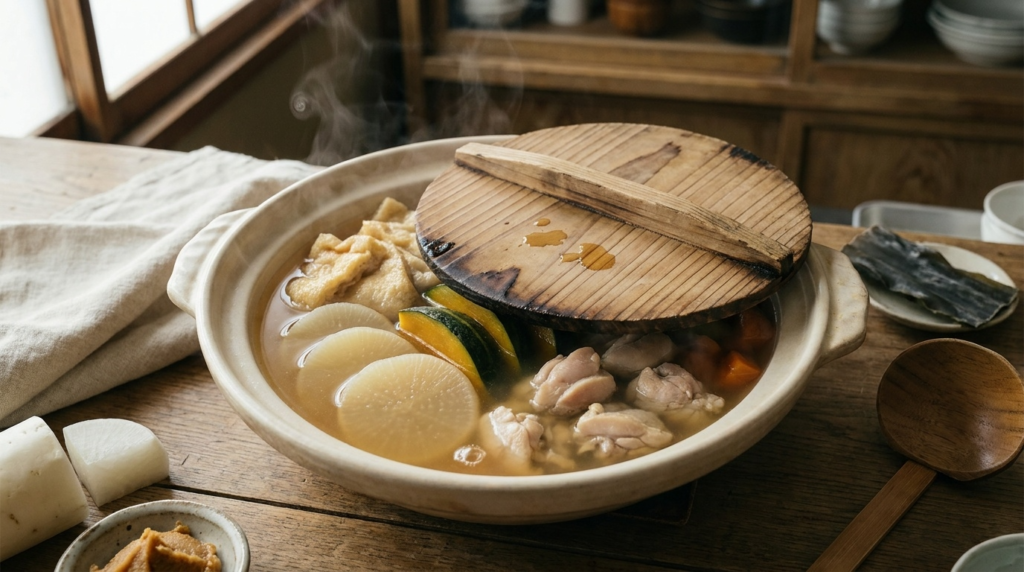
The Lid That Floats: Nimono and the Discipline of the Quiet Simmer
The Lid That Floats: Nimono and the Discipline of the Quiet Simmer A pot of simmered daikon in pale broth is the least photogenic thing in Japanese cooking. It is also where the logic of the entire cuisine becomes visible — in the order the seasonings go in, in a wooden disc resting directly on the food, and in how ... -

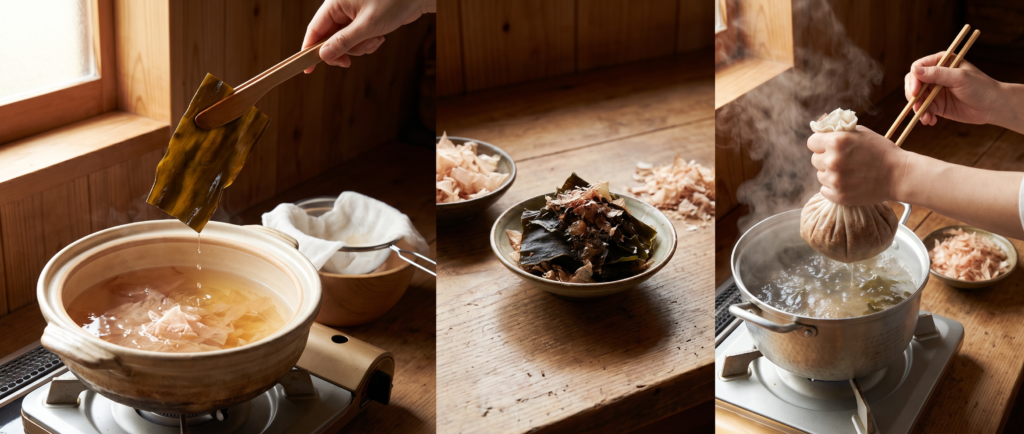
Ichiban and Niban Dashi: The Two Lives of a Handful of Shavings
Ichiban and Niban Dashi: The Two Lives of a Handful of Shavings A professional kitchen draws two entirely different stocks from the same kombu and the same katsuobushi. The first is made in about a minute and treated as perishable. The second is boiled, pressed, and wrung dry. Neither is a lesser version of the othe... -
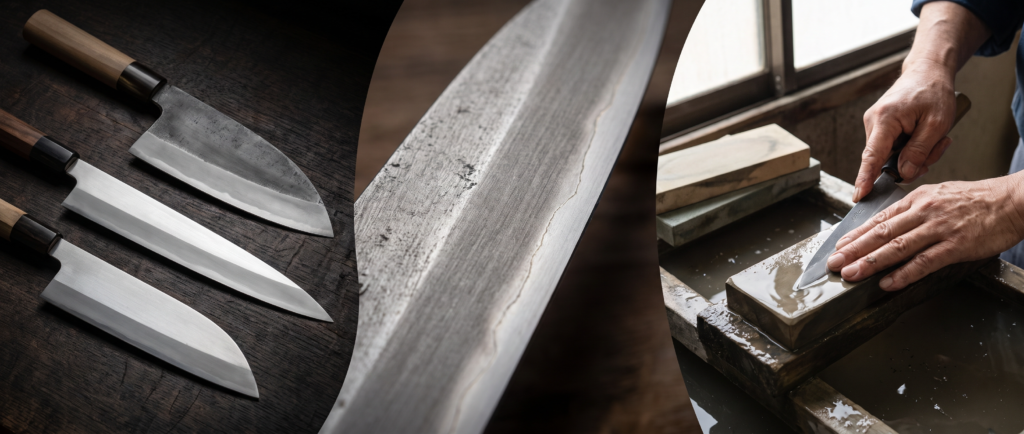
The Japanese Knife: Steel, Single Bevel, and the Soul of the Kitchen
The Japanese Knife: Steel, Single Bevel, and the Soul of the Kitchen Two metals forged into one, an edge ground on a single side, and a back that is hollowed rather than flat — the traditional Japanese knife is built on ideas most Western blades never touch. Pick up a traditional Japanese kitchen knife and hold it t... -
Katsuramuki: The Cut That Measures a Cook
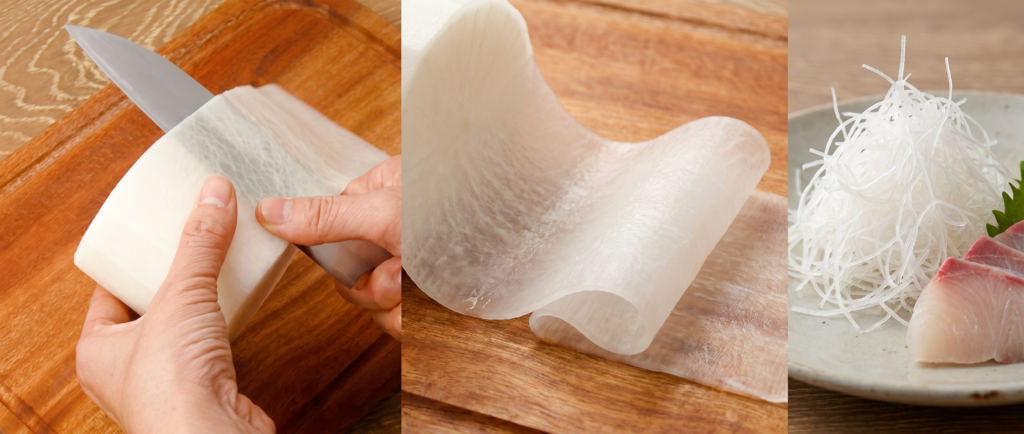
Katsuramuki: The Cut That Measures a Cook A single daikon, peeled into one continuous, paper-thin sheet longer than a person is tall. It sounds like a party trick. In a Japanese kitchen, it is closer to a verdict. Watch a trained Japanese cook perform katsuramuki and the first thing you notice is how little seems to... -
Frying as Restraint: Tempura and the Art of the Light Touch
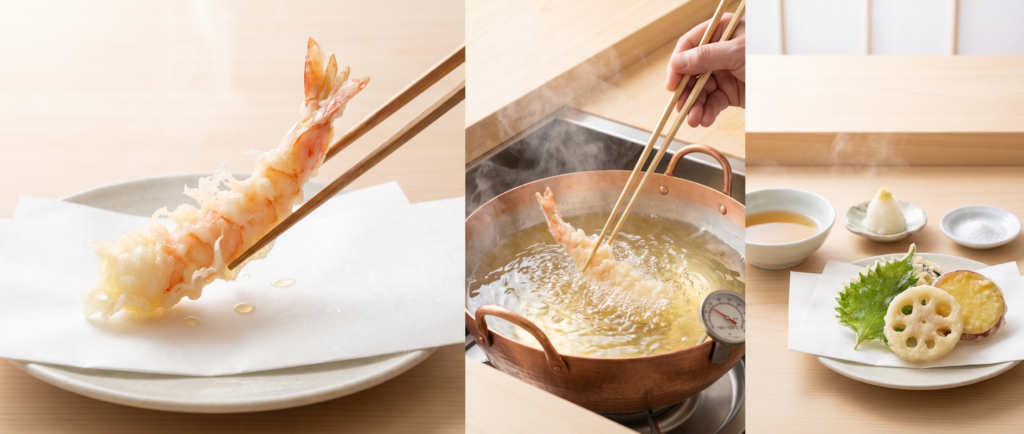
Frying as Restraint: Tempura and the Art of the Light Touch Deep-frying is usually an act of addition — batter, richness, weight. Japanese tempura is the opposite: a technique whose entire purpose is to take moisture away and leave the ingredient more itself than before. There is a moment, at a good tempura counter,... -
The Noodle That Asks Nothing of You: Udon and the Comfort of Wheat
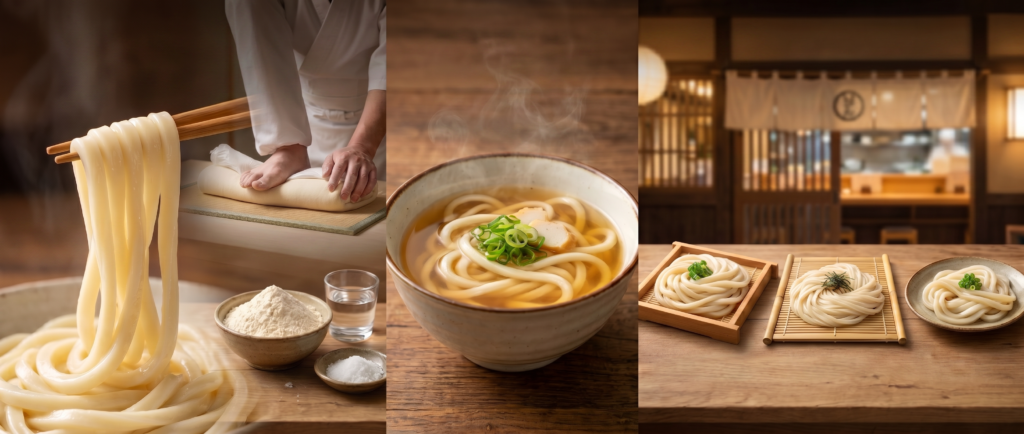
The Noodle That Asks Nothing of You: Udon and the Comfort of Wheat Soba is defined by what it lacks — gluten, and the difficulty that absence creates. Udon is defined by the opposite: gluten is its whole reason for being, and everything worth knowing about it flows from that one fact. There is a particular kind of c... -
Sushi vs Sashimi: What’s Actually the Difference?
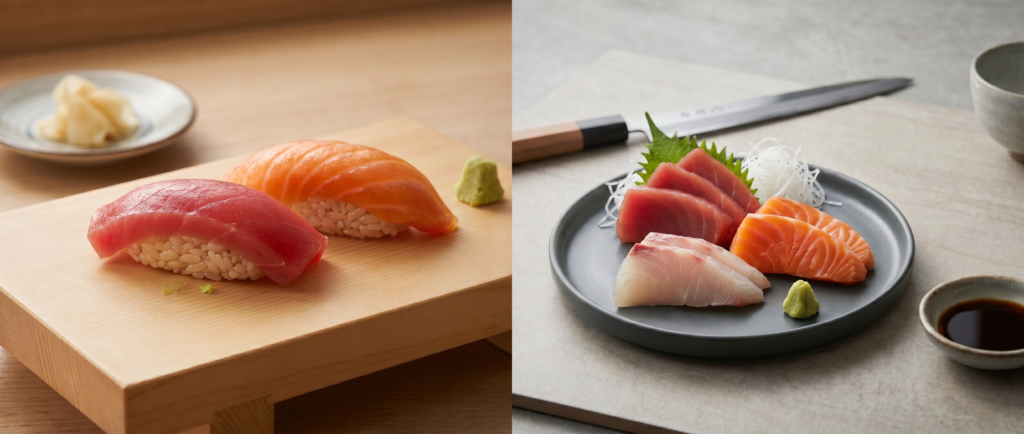
Sushi vs Sashimi: What's Actually the Difference? The short answer is one word: rice. But the more interesting question is why Japan gave a name — and the status of a complete dish — to something as apparently simple as a slice of raw fish. Ask ten people what the difference between sushi and sashimi is, and most wi... -
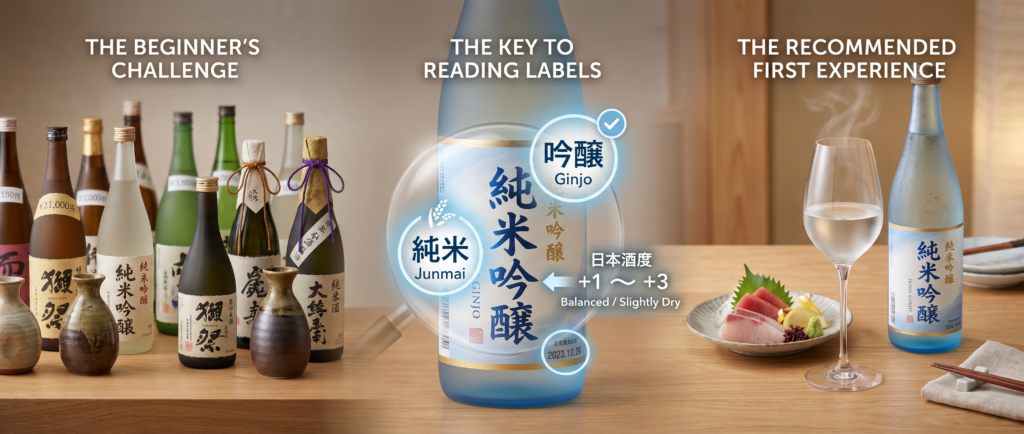
Sake for Beginners: How to Choose Your First Bottle
Sake for Beginners: How to Choose Your First Bottle The hardest part of drinking sake is not drinking it — it is standing in front of a shelf of unfamiliar bottles and having no idea where to begin. The good news is that a few simple ideas will take you most of the way there. There is a particular feeling that comes... -
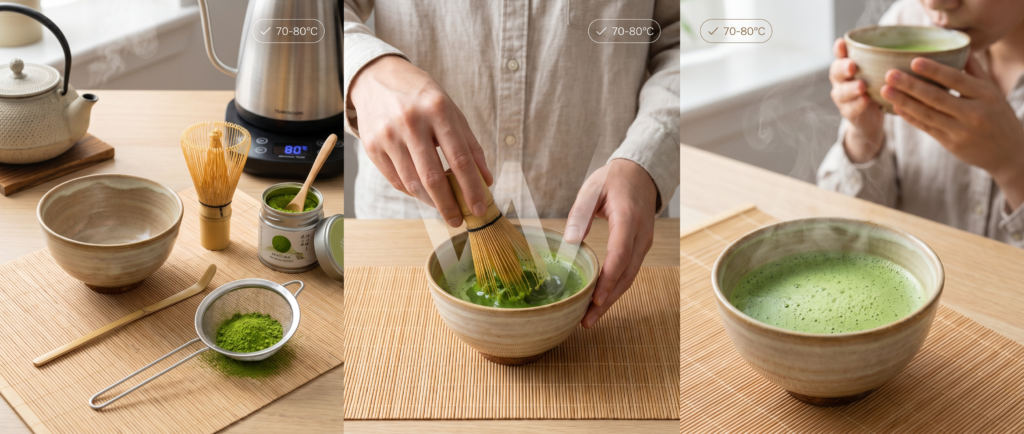
How to Make Matcha: A Beginner’s Guide
How to Make Matcha: A Beginner's Guide A good bowl of matcha takes about two minutes to make and almost nothing to get wrong — once you understand the three things that actually matter: the powder, the water, and the whisk. Making matcha can look intimidating from the outside. There is the special bowl, the bamboo w... -
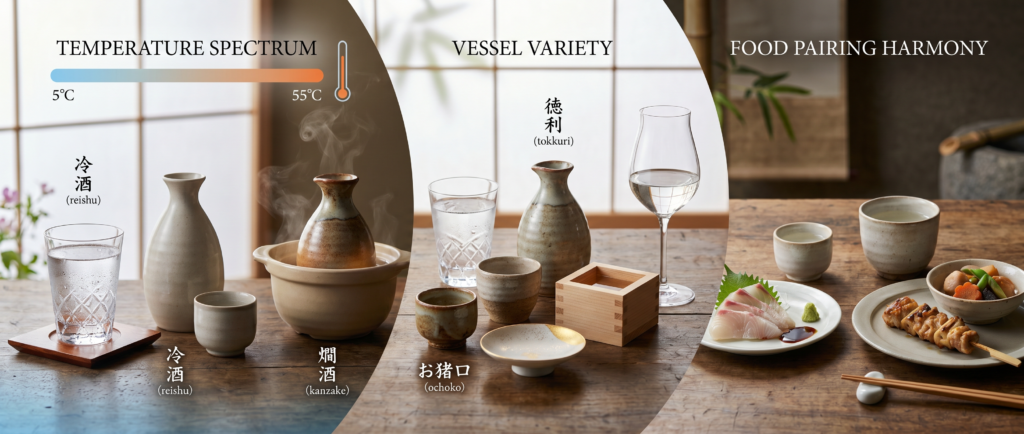
How to Serve Sake: Temperature, Cups & Pairing
How to Serve Sake: Temperature, Cups & Pairing No other drink in the world is enjoyed across so wide a range of temperatures, in so many vessels, with so few fixed rules. To serve sake well is to make a series of small, deliberate choices — and each one changes what is in the glass. Most drinks have a correct se... -
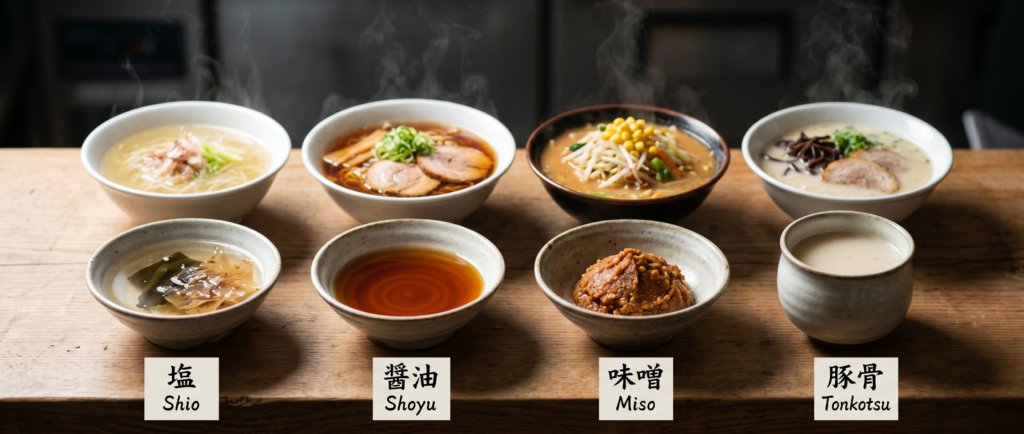
The Four Tares: Shio, Shoyu, Miso & Tonkotsu Explained
The Four Tares: Shio, Shoyu, Miso & Tonkotsu Explained Every bowl of ramen is named for one of these four words. But only three of them are the same kind of thing — and understanding why the fourth is different is the clearest way to understand how a bowl of ramen is actually built. Walk into a ramen shop anywhe...
12