dashi– tag –
-

The Lid That Floats: Nimono and the Discipline of the Quiet Simmer
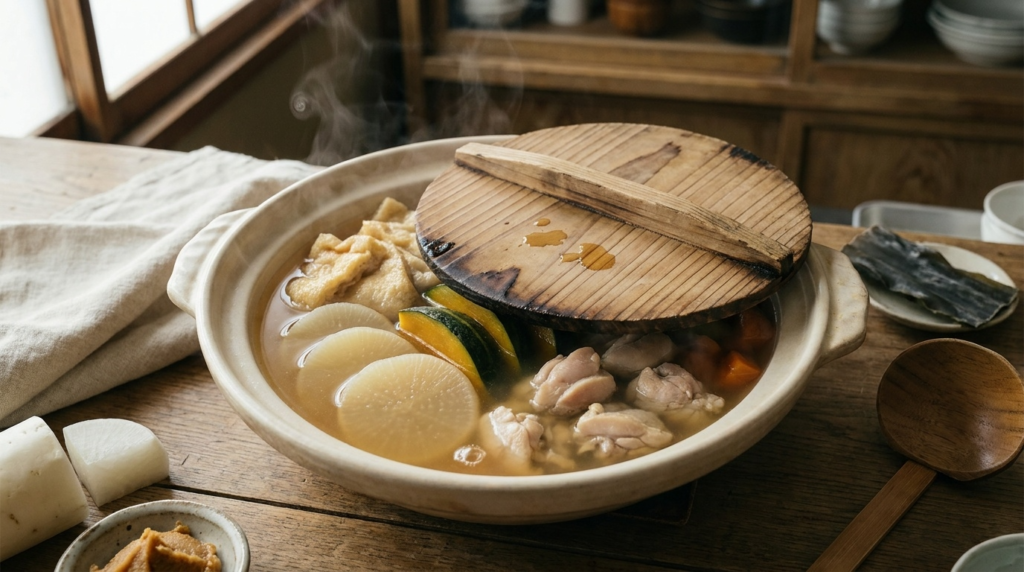
The Lid That Floats: Nimono and the Discipline of the Quiet Simmer A pot of simmered daikon in pale broth is the least photogenic thing in Japanese cooking. It is also where the logic of the entire cuisine becomes visible — in the order the seasonings go in, in a wooden disc resting directly on the food, and in how ... -
Harder Than Rock Salt: Katsuobushi and the Mould That Dries a Fish From the Inside
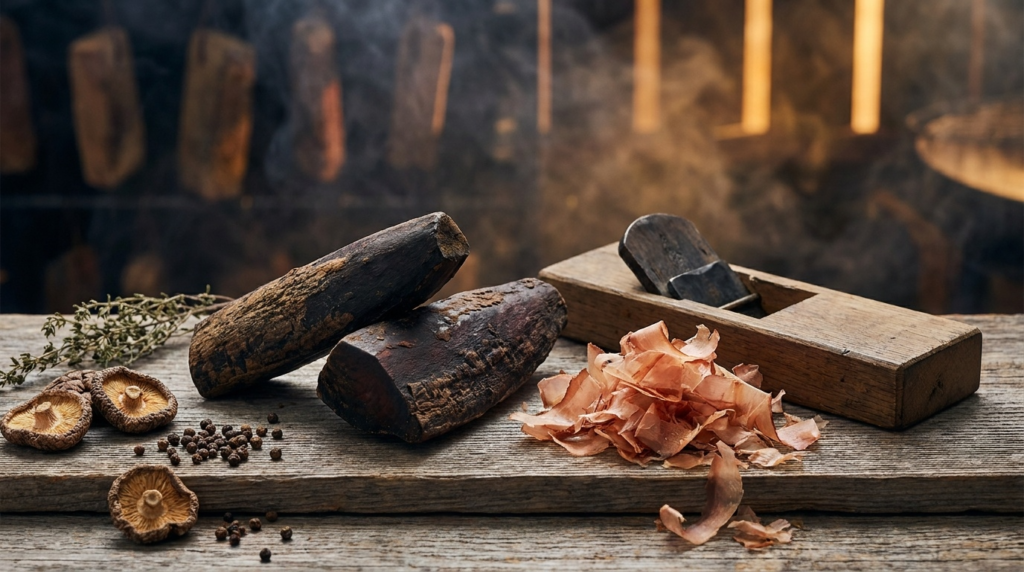
Harder Than Rock Salt: Katsuobushi and the Mould That Dries a Fish From the Inside Known in English as bonito flakes, a finished block of katsuobushi rings when you strike it. Getting there takes six months, ten fires, and four generations of a fungus that thrives in conditions close to a desert — and whose entire j... -

Ichiban and Niban Dashi: The Two Lives of a Handful of Shavings
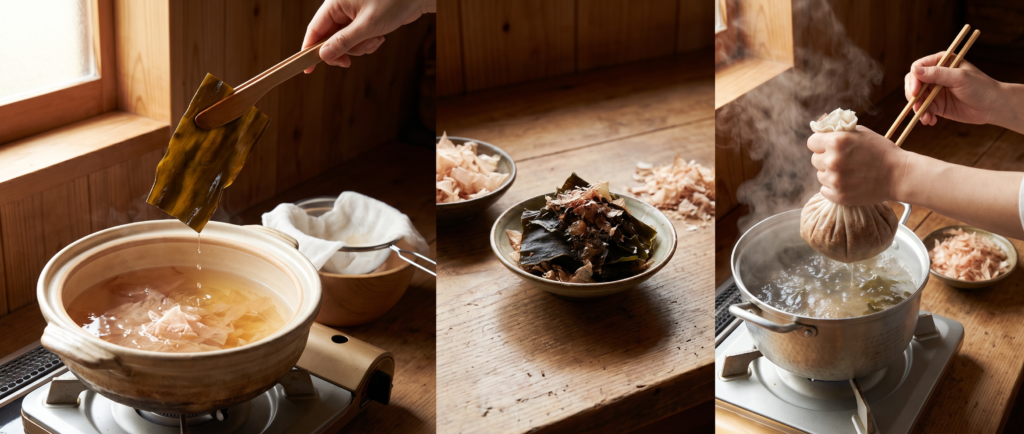
Ichiban and Niban Dashi: The Two Lives of a Handful of Shavings A professional kitchen draws two entirely different stocks from the same kombu and the same katsuobushi. The first is made in about a minute and treated as perishable. The second is boiled, pressed, and wrung dry. Neither is a lesser version of the othe... -
Umami: The Fifth Taste Japan Gave the World
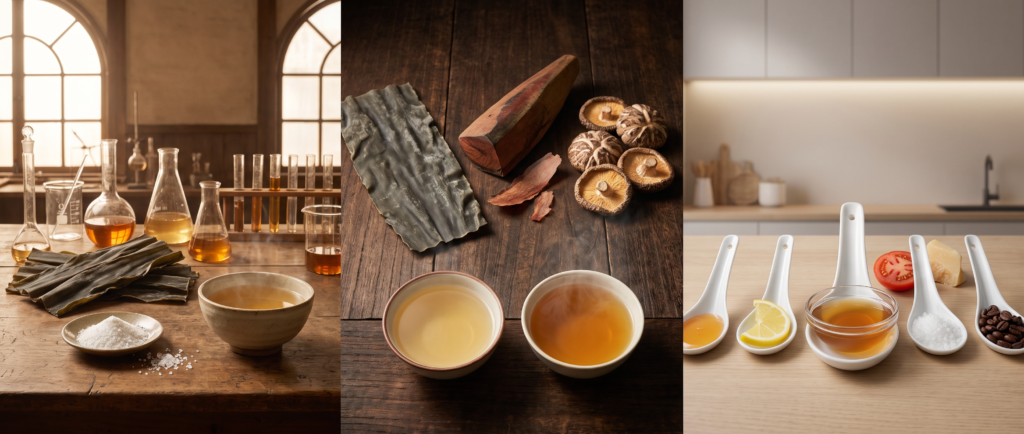
Umami: The Fifth Taste Japan Gave the World For most of a century, Western science recognized four basic tastes. The fifth had already been discovered — in a bowl of kelp broth, by a Tokyo chemist, in 1908 — and it took the world ninety years to catch up. Ask most people to name the basic tastes and they will get to... -

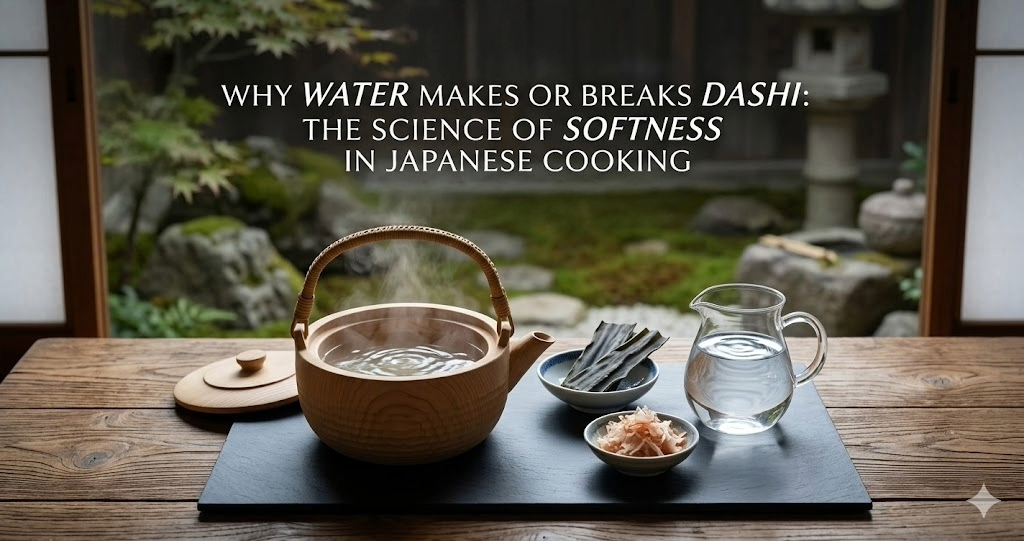
Why Water Makes or Breaks Dashi: The Science of Softness in Japanese Cooking
Water hardness critically affects dashi: soft water enables full umami extraction from kombu and katsuobushi, while hard water blocks it, explaining regional Japanese flavors and why results differ abroad. -
The Philosophy of Dashi: Japan’s Invisible Foundation
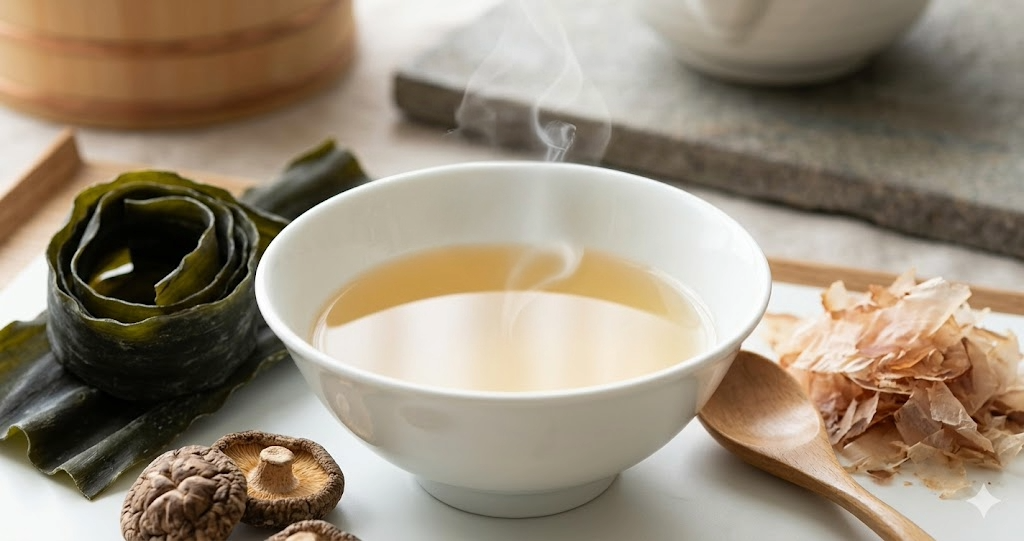
The Philosophy of Dashi: Japan's Invisible Foundation Japanese cooks do not make dashi. They draw it. That single verb — hiku, to pull — contains an entire philosophy of cooking, and an answer to why Japanese cuisine tastes the way it does. Set a bowl of good miso soup in front of someone who has never encountered J... -
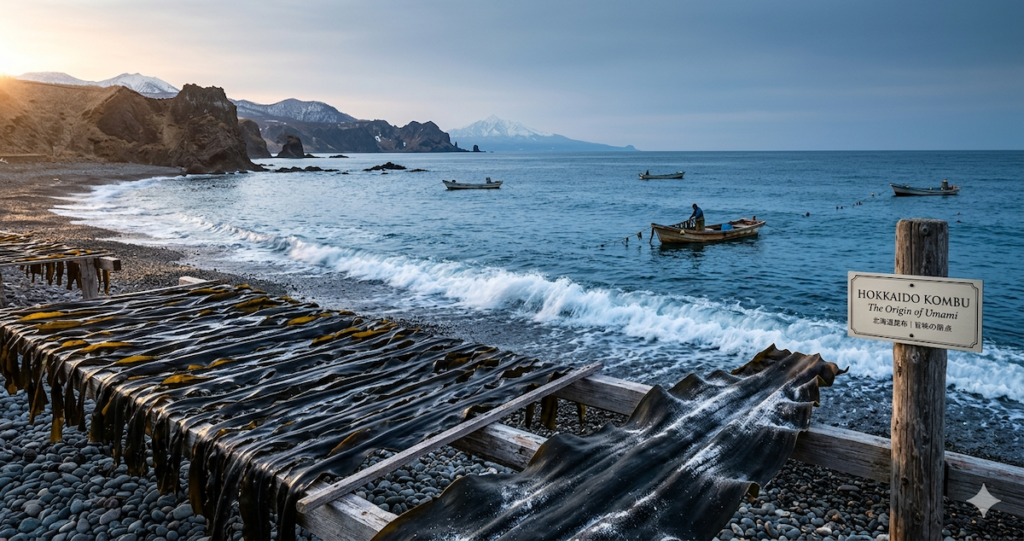
The Cold Waters of Hokkaido: Where Kombu Begins
The Cold Waters of Hokkaido: Where Kombu Begins Before the dashi, before the soup, before the dish — there is the sea. Japan's kombu culture begins in the cold currents off Hokkaido, where three distinct coastlines produce three entirely different flavors. Pull a strip of dried kombu from its wrapping and hold it up...
1