origin– tag –
-

The Uni Coast: Sea Urchin and the Geography of Japan’s Cold Shores
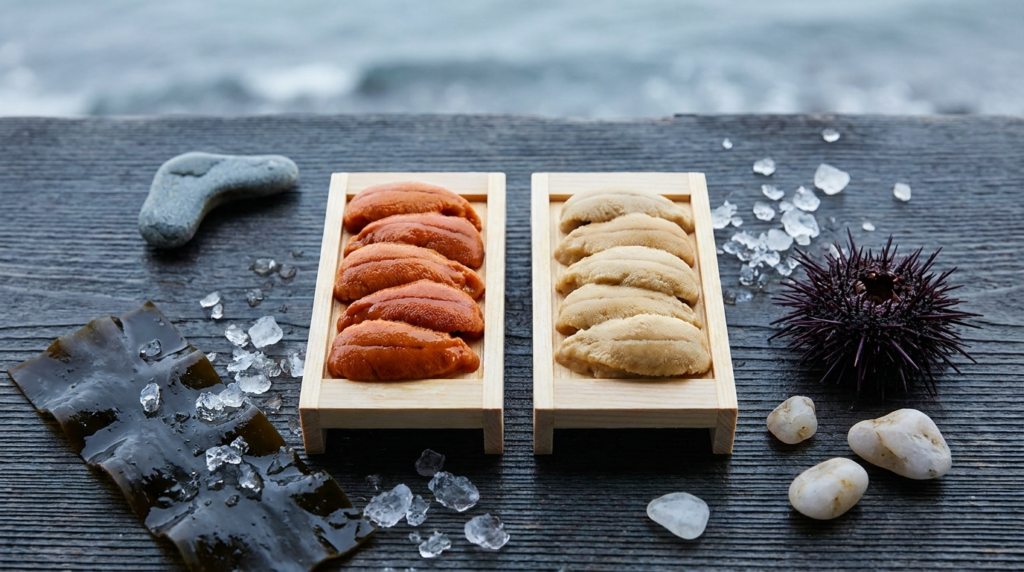
The Uni Coast: Sea Urchin and the Geography of Japan's Cold Shores Four out of every five sea urchins landed in Japan come from two stretches of coastline. It is not an accident of fishing effort. It is a map of where kelp grows — and uni is, in the most literal sense, kelp that has been eaten and rearranged. On a g... -

Yuzu and the Citrus That Refuses to Be a Fruit
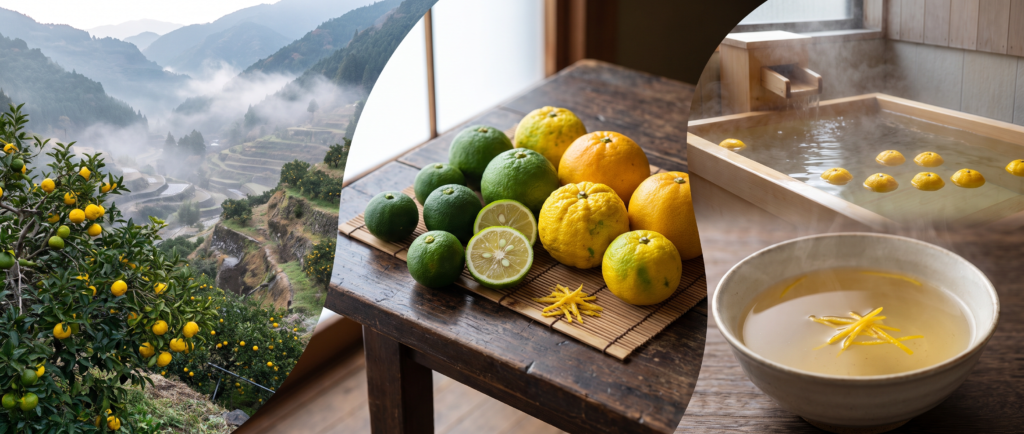
Yuzu and the Citrus That Refuses to Be a Fruit No one bites into a yuzu. Japan's most beloved citrus is grown not to be eaten but to be smelled — its aromatic peel, its sharp cold-weather juice, and a family of green cousins that between them flavor an entire cuisine without ever appearing whole on the plate. Here i... -
Wasabi: The Plant That Almost No One Actually Eats
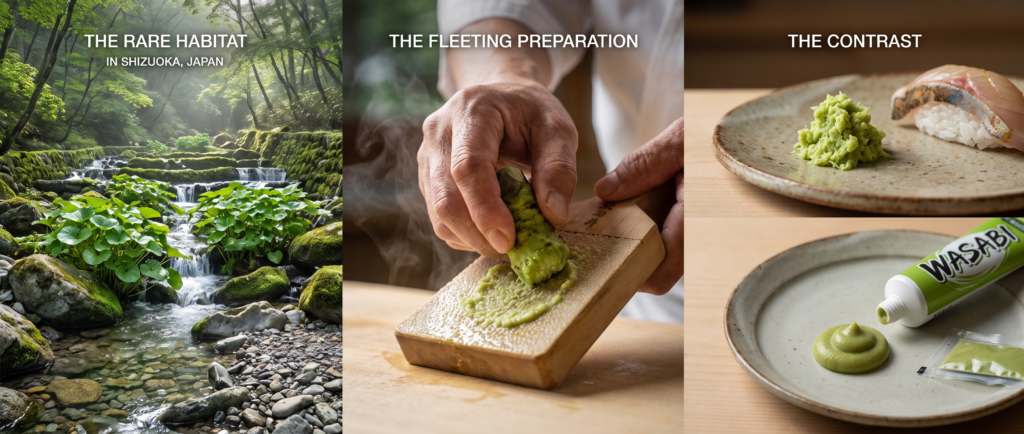
Wasabi: The Plant That Almost No One Actually Eats Real wasabi grows only in cold, running mountain water — which is why the green paste beside your sushi is, overwhelmingly, something else entirely. Here is an uncomfortable fact to begin with: the little green mound you have almost certainly eaten alongside sushi w... -
The Grain at the Center: How Rice Made Japan
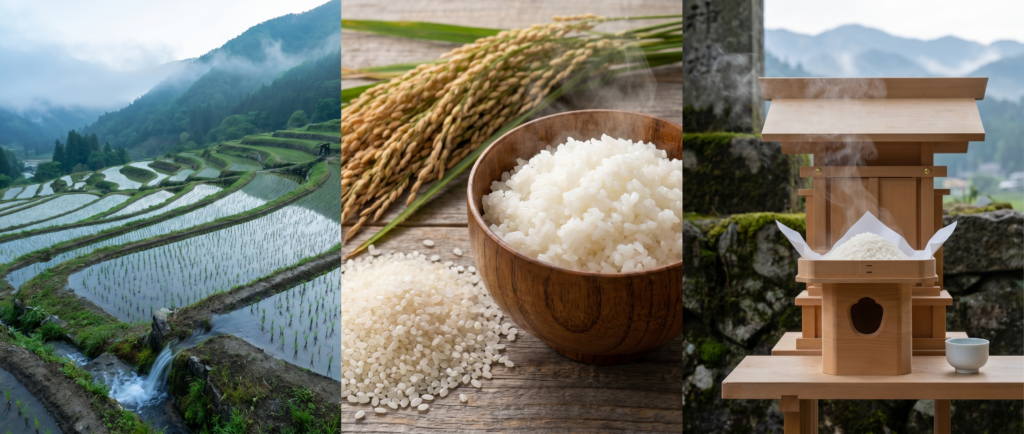
The Grain at the Center: How Rice Made Japan Before it was a food, rice was a reason to organize a landscape, a calendar, a religion, and a state. To understand Japan, you have to start in the flooded field. Fly over rural Japan in early summer and the country reveals its oldest logic from the air. Between the mount... -
Matcha vs Green Tea: What’s the Difference?
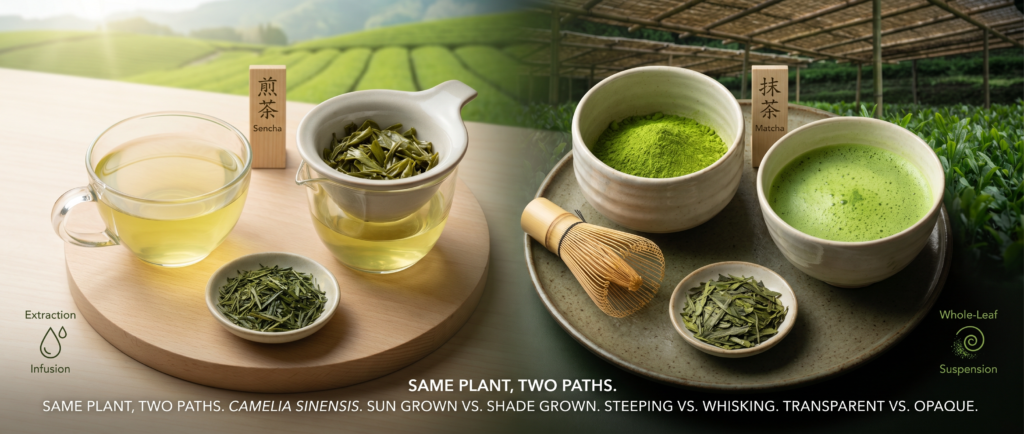
Matcha vs Green Tea: What's the Difference? They come from the same plant — the same species, often the same regions. But one is steeped and strained away, and the other is shaded, ground, and swallowed whole. That single difference changes everything about how they taste, how they are made, and what they do. It sur... -

Hakata vs. Sapporo: How a City Shapes Its Ramen
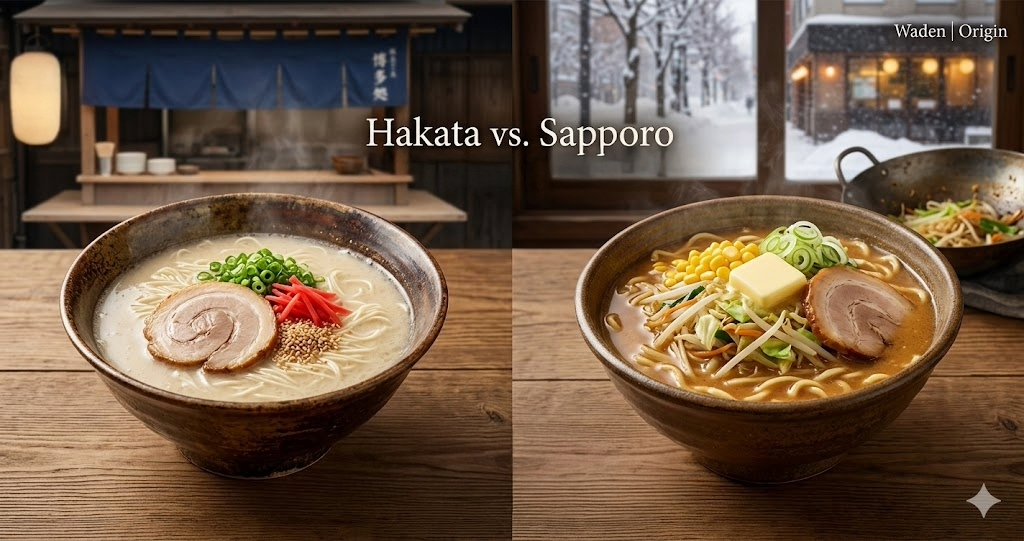
Hakata vs. Sapporo: How a City Shapes Its Ramen Two cities. Two climates. Two completely different answers to the same question: what should a bowl of ramen feel like? The distance between Hakata's milky pork broth and Sapporo's miso-fired warmth is not just geography — it is the story of how place becomes flavor. R... -
The Geography of Soba: How Place Shapes a Noodle
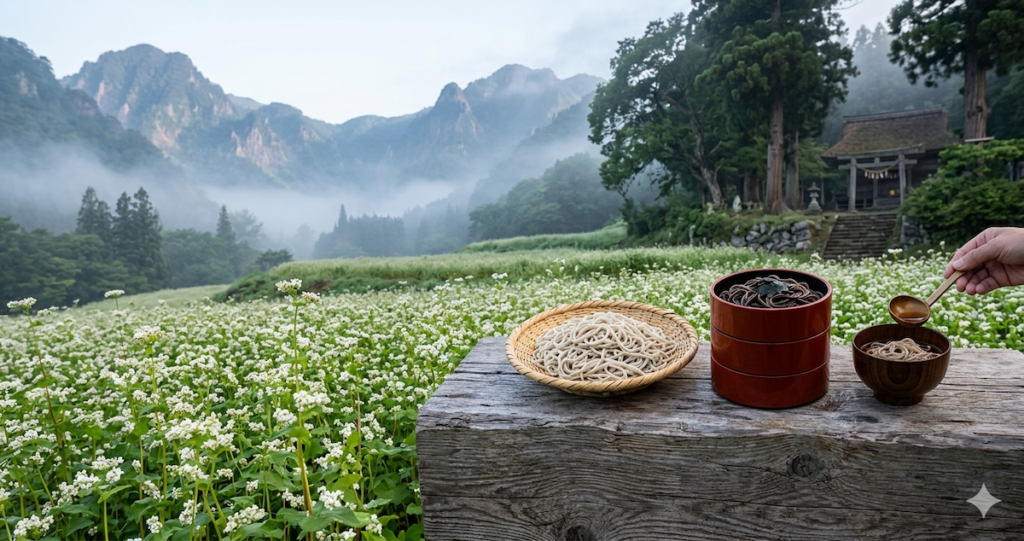
The Geography of Soba: How Place Shapes a Noodle Buckwheat grows where rice cannot — in cold highlands, volcanic soils, and mountain villages that have shaped some of Japan's most distinctive regional food cultures. To eat soba is to eat a landscape. Order a bowl of soba in Tokyo and you will receive something quite... -
The Cold Waters of Hokkaido: Where Kombu Begins
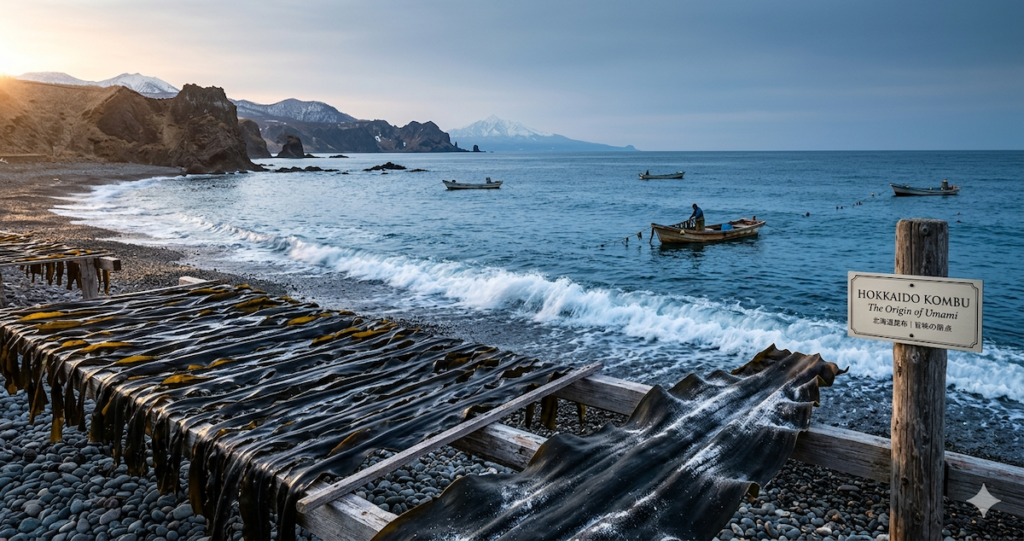
The Cold Waters of Hokkaido: Where Kombu Begins Before the dashi, before the soup, before the dish — there is the sea. Japan's kombu culture begins in the cold currents off Hokkaido, where three distinct coastlines produce three entirely different flavors. Pull a strip of dried kombu from its wrapping and hold it up...
1