Categories
  • Fermentation
  • Heritage
  • Origin
  • Seasons
  • Technique
  • Vessel
You don't taste food. You taste its history.
Waden
  • About Waden
  • CONTACT US
Waden
  • About Waden
  • CONTACT US
  1. Home
  2. japanese-tea

japanese-tea– tag –

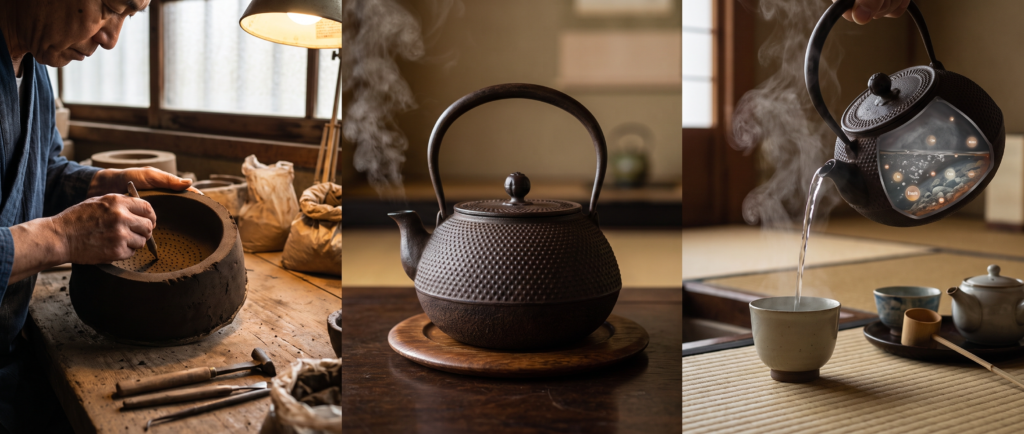
  • Three-part composition showing craftsman's hands impressing arare hailstone pattern dots into sand-clay mold for tetsubin; traditional Nanbu tekki cast-iron kettle with characteristic raised-dot pattern and arched handle with steam rising from spout; clear softened water being poured from tetsubin into ceramic teacup with visible steam, illustrating 400-year-old Iwate craft that transforms ordinary tap water through bare cast iron chemistry, chlorine removal, and trace ferrous iron dissolution into mellower-tasting heirloom object.
    Vessel

    Nanbu Tekki: The Cast Iron That Changes the Water

    Nanbu Tekki: The Cast Iron That Changes the Water Boil ordinary tap water in a Japanese iron kettle and it comes out tasting different — softer, rounder, cleaner. The reason is partly chemistry, partly four hundred years of a northern craft that treats a kettle as an heirloom. There is a claim that sounds like folkl...
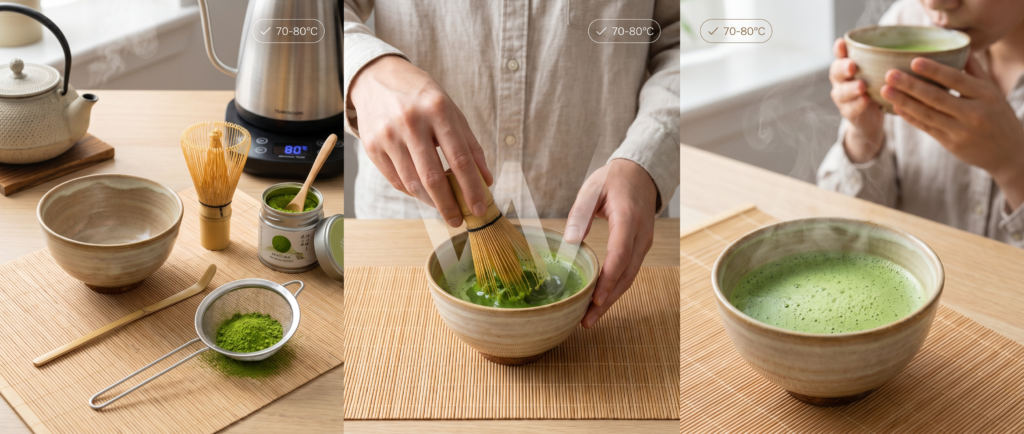
  • "Step-by-step matcha preparation showing traditional tools including chawan bowl, bamboo chasen whisk, and sifted vibrant green powder, demonstrating proper whisking technique with W-pattern motion, and finished usucha thin tea with smooth foam layer illustrating proper 70-80°C water temperature method."
    Technique

    How to Make Matcha: A Beginner’s Guide

    How to Make Matcha: A Beginner's Guide A good bowl of matcha takes about two minutes to make and almost nothing to get wrong — once you understand the three things that actually matter: the powder, the water, and the whisk. Making matcha can look intimidating from the outside. There is the special bowl, the bamboo w...
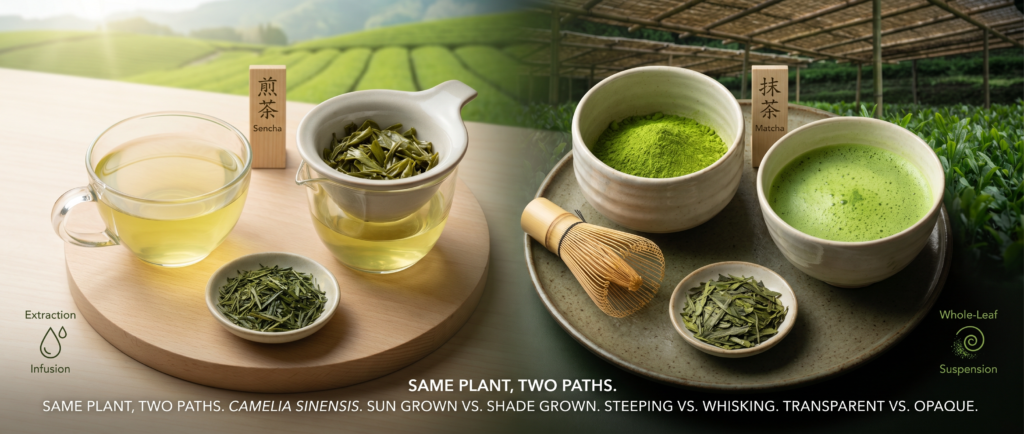
  • Split comparison showing green tea sencha as clear pale golden infusion with steeped leaves in strainer versus matcha as vibrant green powder whisked into opaque suspension, illustrating that sencha is extracted and discarded while matcha is shade-grown, stone-ground, and consumed whole.
    Origin

    Matcha vs Green Tea: What’s the Difference?

    Matcha vs Green Tea: What's the Difference? They come from the same plant — the same species, often the same regions. But one is steeped and strained away, and the other is shaded, ground, and swallowed whole. That single difference changes everything about how they taste, how they are made, and what they do. It sur...
1
Browse by Category
Subscribe by Email

Enter your email to subscribe and receive new posts straight to your inbox.

© Waden.