tonkotsu– tag –
-

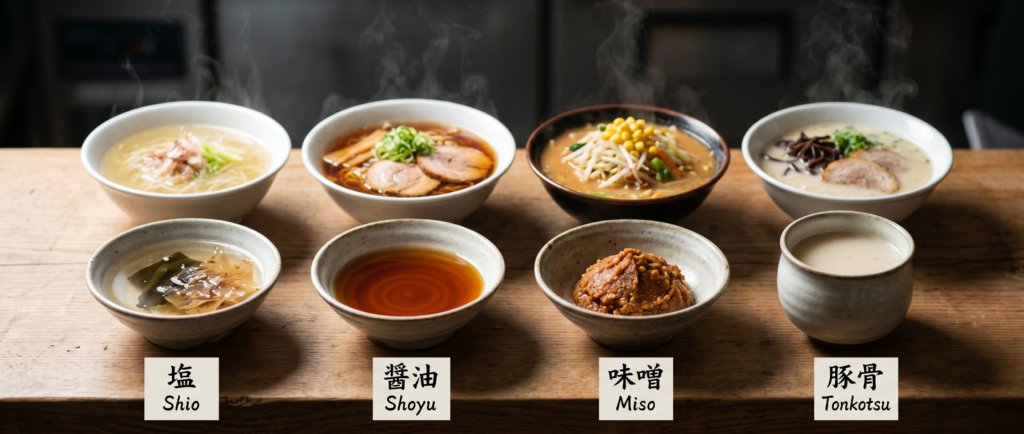
The Four Tares: Shio, Shoyu, Miso & Tonkotsu Explained
The Four Tares: Shio, Shoyu, Miso & Tonkotsu Explained Every bowl of ramen is named for one of these four words. But only three of them are the same kind of thing — and understanding why the fourth is different is the clearest way to understand how a bowl of ramen is actually built. Walk into a ramen shop anywhe... -

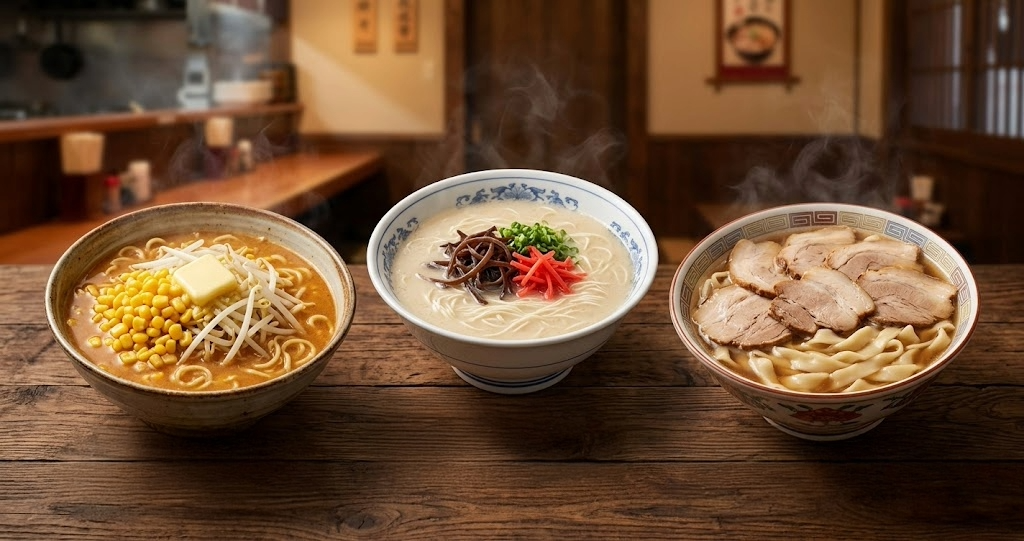
What Ramen Really Is: The Three Styles That Built Japan’s Noodle Culture
This article explores Japan’s "Three Great Ramen"—Sapporo, Hakata, and Kitakata—detailing their distinct histories, broth bases, and noodle styles that reflect the unique climates and cultures of their respective regions. -
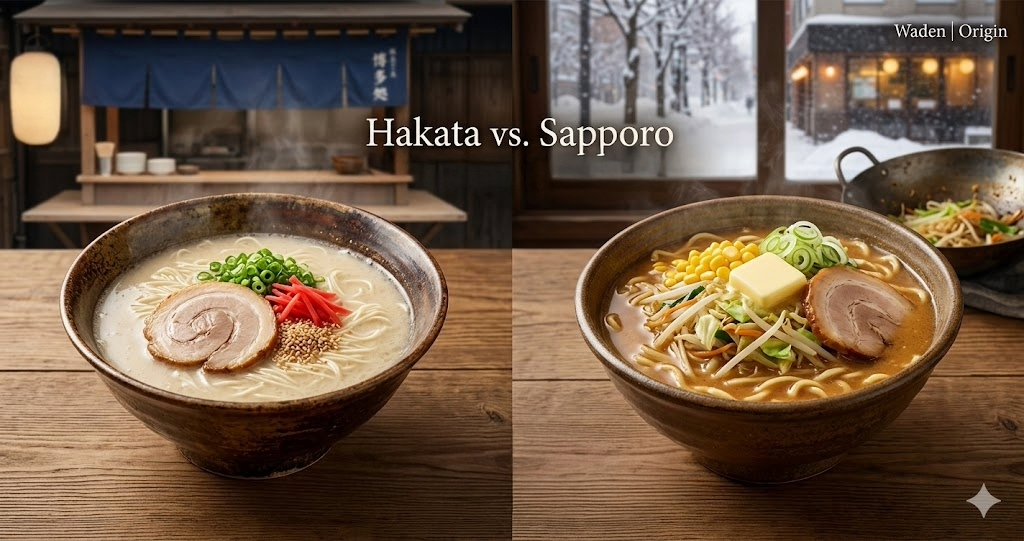
Hakata vs. Sapporo: How a City Shapes Its Ramen
Hakata vs. Sapporo: How a City Shapes Its Ramen Two cities. Two climates. Two completely different answers to the same question: what should a bowl of ramen feel like? The distance between Hakata's milky pork broth and Sapporo's miso-fired warmth is not just geography — it is the story of how place becomes flavor. R...
1