Spring on the Plate: Sakura, Bamboo Shoots, and the Taste of Beginnings
Japanese spring food is built around a single idea — that a beginning has a flavor. It is faintly bitter, faintly sweet, wrapped in a salted leaf, and gone almost as soon as it arrives.
Of all the seasons, spring is the one Japan seems most anxious not to miss. The cherry blossoms last barely a week; the first bamboo shoots turn bitter within a day of being dug; the clams are at their best for only a narrow window before the season closes. Spring food is, above everything, food that will not wait — and much of the culture around it is really a culture of catching a moment before it passes.
This is spring seen up close. We have written elsewhere about the whole turning year, walking all twenty-four seasons of the Japanese table in order, and about the philosophy of shun, the belief that every ingredient has one true moment. Here we slow down and stand inside a single season, and ask what, exactly, a beginning tastes like.
The Flavor of Waking Up
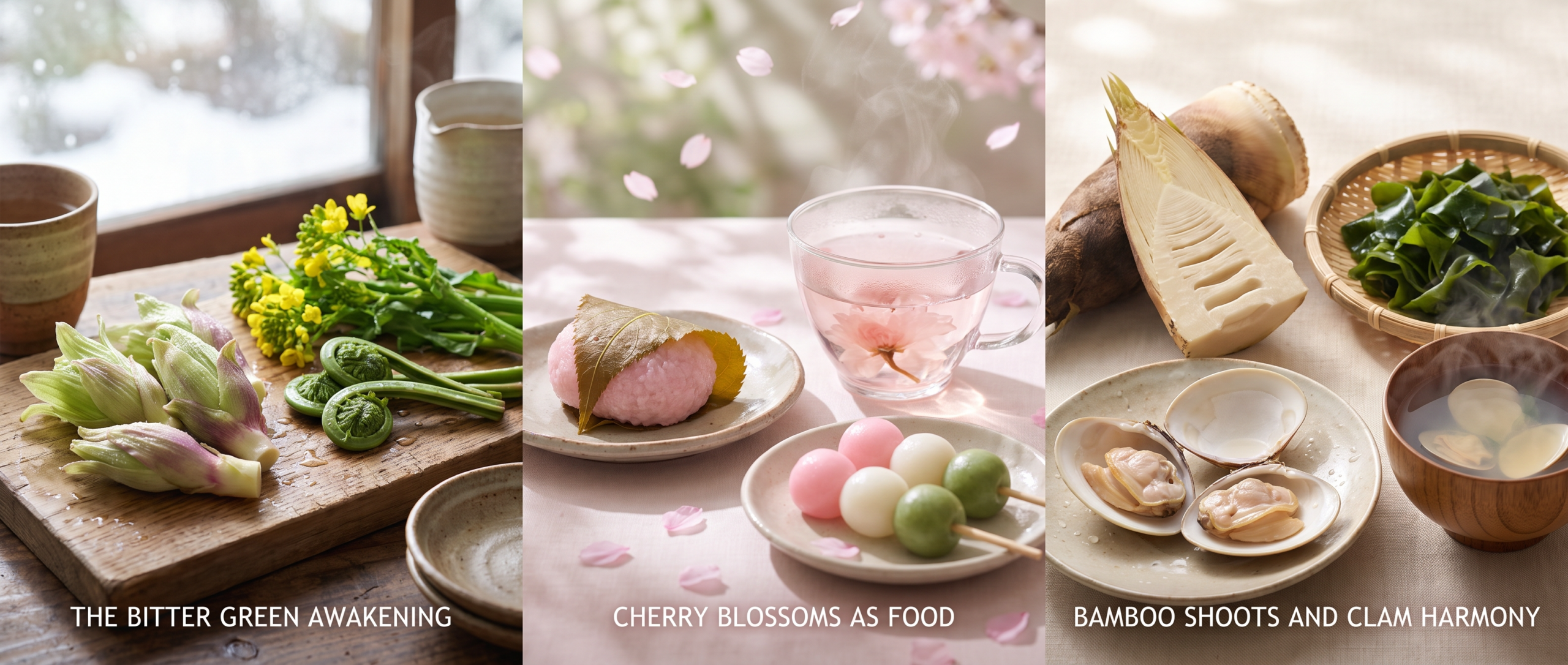
There is an old rule in the Japanese kitchen: the spring plate should carry a note of bitterness. It is not an accident of what happens to grow, but a principle taken seriously. After a long winter of stored roots, salted fish, and preserved food, the sharp green astringency of early spring is understood to rouse the body — to shake off the heaviness of the cold months and prepare it for the year.
You taste this first in sansai, the wild mountain vegetables that push up as the snow recedes — butterbur buds, bracken, fiddlehead ferns — all prized precisely for their edge of bitterness. You taste it again in nanohana, the rape blossom, a slender green with a gentle bite that is quickly blanched and dressed. Where other cuisines welcome spring with sweetness, Japan welcomes it with a clean, deliberate bitterness. The first flavor of the year is meant to wake you up.
The spring plate should carry a note of bitterness. After a winter of stored food, that sharp green edge is understood to wake the body — a beginning you can taste.
Bamboo Shoots, and a Race Against Time
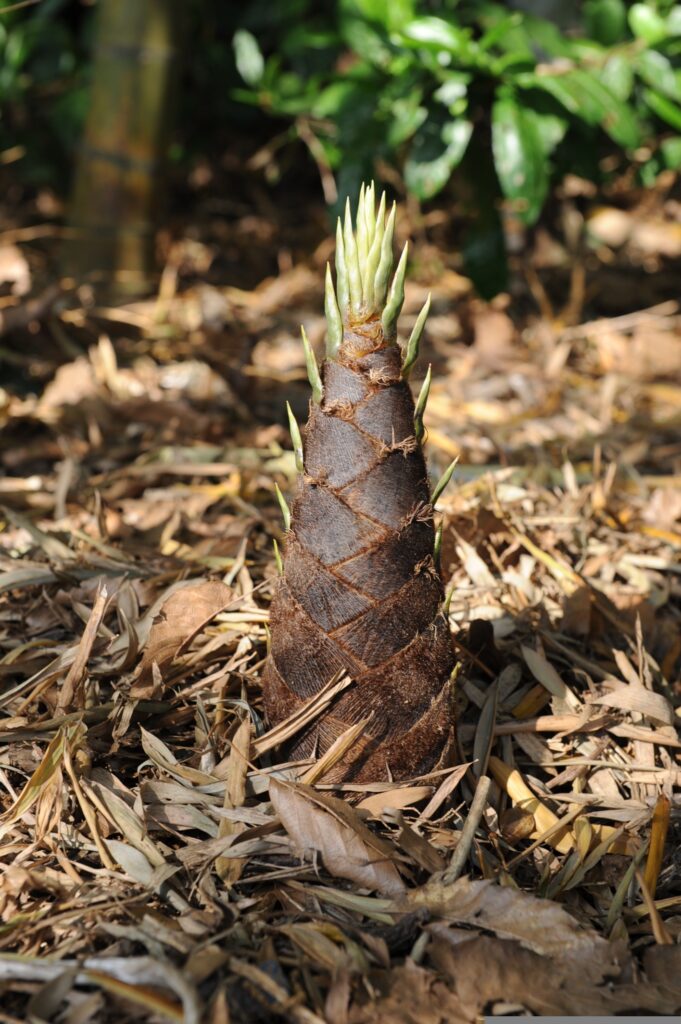
The great vegetable of spring is takenoko, the bamboo shoot, dug from the earth between March and May at the instant it breaks the surface. Its appeal is a tender crispness and a faint sweetness — but that sweetness is fugitive, because a bamboo shoot begins turning harsh and bitter almost the moment it is cut. The harshness, an astringency the Japanese call egumi, rises so fast that the classic instruction is to start cooking a shoot the same day it is dug, ideally within hours.
This is why fresh takenoko is inseparable from a preparatory ritual — aku-nuki, the drawing-out of harshness, traditionally by boiling the shoot with rice bran to leach away the bitter compounds before it is used. Only then does it reach the dish that most perfectly expresses the season: wakatakeni, young bamboo shoots simmered gently with the first tender wakame seaweed of spring, two ingredients at their peak cooked together. The name pairs them — waka, young, and take, bamboo — a small edible portrait of the season’s freshness.
Eating the Cherry Blossom
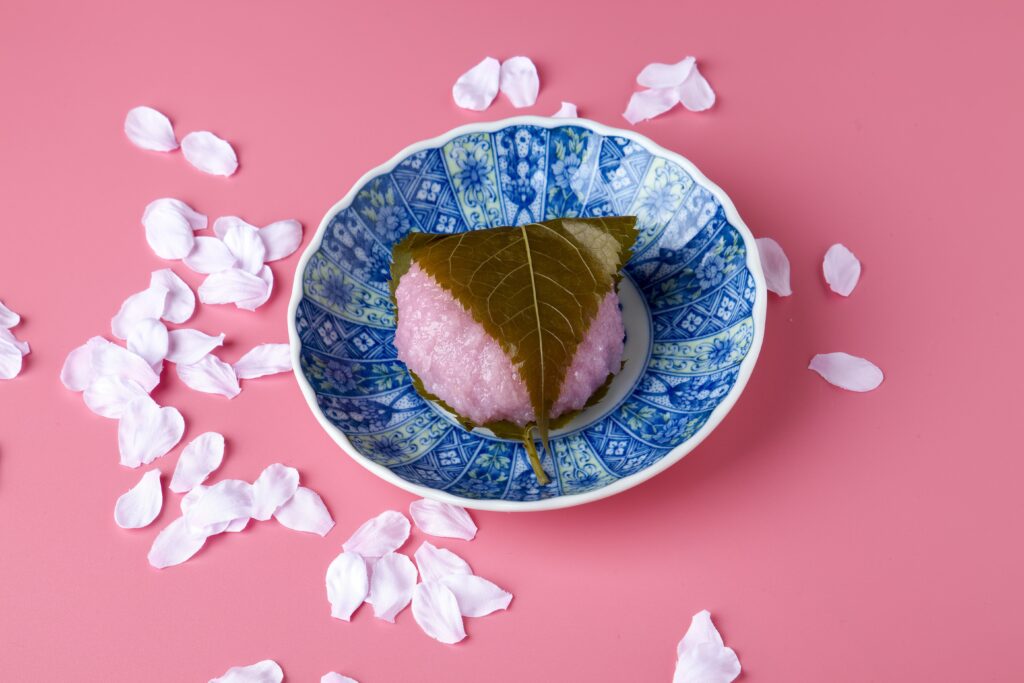
No plant belongs to Japanese spring the way the cherry does, and remarkably, the blossom is not only looked at but eaten and drunk. The trick is salt. Cherry leaves and blossoms are too delicate and faintly bitter to use fresh, but pickled in salt they keep, and they yield a haunting, unmistakable aroma — the actual scent of spring, captured and preserved.
The most beloved result is sakuramochi, a sweet of pink rice cake and red bean paste wrapped in a single salt-pickled cherry leaf, and it comes in two forms that quietly map the country’s east–west divide. The Tokyo version, Chōmeiji, is a thin, crêpe-like wrapper of wheat-flour batter folded around the bean paste; it takes its name from Chōmeiji temple by the Sumida River, where an Edo-period caretaker is said to have invented it using the pickled leaves of the riverbank cherries. The Kansai version, Dōmyōji, is quite different — a bumpy, chewy dome made from dōmyōji-ko, coarsely ground steamed glutinous rice named for a temple in Osaka. Two sweets, one name, one salted leaf, and a centuries-old argument about which is the “real” sakuramochi that no one expects to settle. The salted leaf, in both, is the point: it presses a savory, aromatic counterweight against the sweetness, so the whole thing tastes less like candy than like the season itself.
The blossom is also drunk. Sakurayu — cherry-blossom tea — is nothing more than salt-pickled cherry flowers steeped in hot water, where they slowly open and unfurl. It is a celebratory drink, served at weddings, betrothals, and formal marriage meetings, chosen partly because the flower literally blooms in the cup — an image of good things opening — and partly as an auspicious stand-in for ordinary tea. And under the blossoming trees themselves comes hanami-dango, the skewer of three dumplings in pink, white, and green that is the edible emblem of hanami, cherry-blossom viewing. There is a well-worn saying, hana yori dango — “dumplings over blossoms” — a gentle joke at those who come for the picnic more than the flowers.
A Clam That Symbolizes a Marriage
The signature seafood of spring is the hamaguri, the clam, at its plump best from late winter into early spring. But the reason it appears on a specific day has nothing to do with flavor and everything to do with its shell — and this is one of the loveliest small ideas in the Japanese food year.
A clam has two shells, and here is the fact the culture seized on: the two halves of a single clam fit each other perfectly, and will fit no other shell. Try to pair one half with the shell of a different clam and it never quite closes. From this, spring drew a symbol of marital harmony and fidelity — the idea of one perfect, irreplaceable partner. The same property made clam shells the pieces of an elegant Heian-era matching game, kai-awase.
So on the third day of the third month — Hinamatsuri, the Doll’s Festival, celebrating the health and happiness of girls — the traditional dish is ushiojiru, a clear, delicate clam soup, each bowl carrying the wish that a daughter will one day find her one good match and a harmonious marriage. Around it sits the rest of the festival’s pale, pretty spread: scattered chirashi-zushi, the diamond-shaped tricolor hishimochi, and crisp little hina-arare. Few dishes anywhere pack so much meaning into so simple a bowl — a clam soup that is really a blessing.
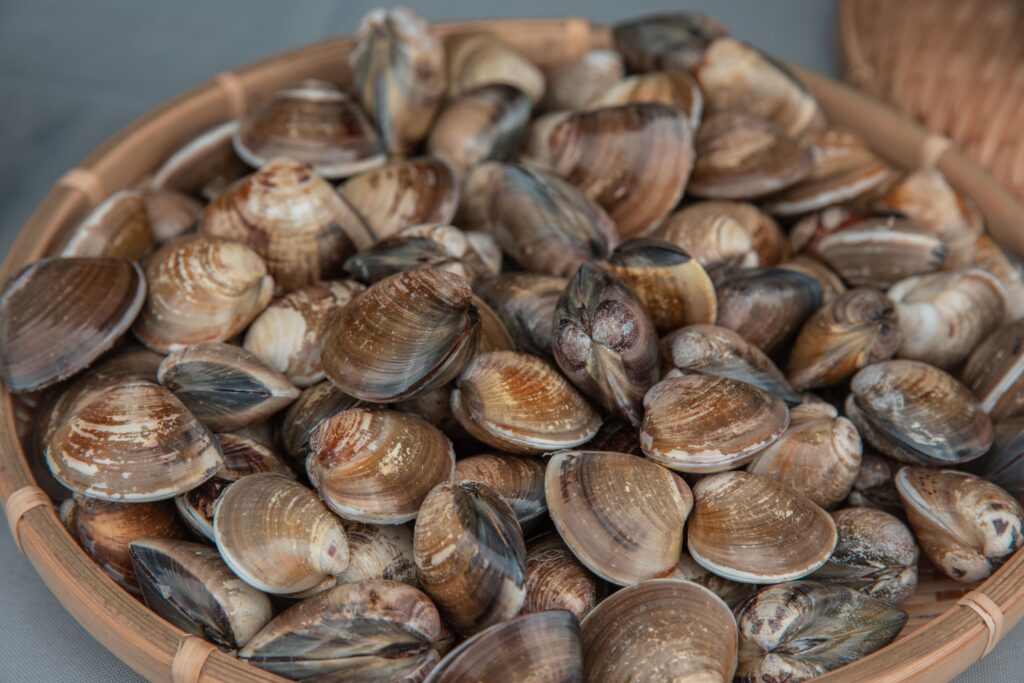
A clam’s two shells fit each other and no other. From that, spring built a symbol of one irreplaceable partner — and a bowl of clam soup became a wish for a daughter’s happy marriage.
The Season as a Beginning
What ties all of this together — the bitter shoots, the fleeting bamboo, the salted blossom, the paired shells — is that spring in Japan is understood not merely as a season but as a start. The traditional year turns over here; the school and business year begins in April, under falling petals; the food is food for waking up and starting again. Even the emotional register is forward-looking, an eagerness to begin, which is the exact opposite of autumn’s wistful farewells.
That is why the flavors are what they are. A note of bitterness to rouse the body. A vegetable so fleeting you must race it to the pot. A blossom captured in salt so its scent can survive its week of glory. A clam that stands for a lifelong bond, served to a child at the very start of her life. To eat Japanese spring is to taste beginnings — brief, deliberate, and gone before you are ready, which is precisely what makes people reach for them so eagerly, year after year, the moment they appear.
Read, then taste. This article is part of Waden’s Seasons series — following the rhythm of the Japanese culinary year. For the whole turning year in order, read A Year at the Japanese Table; for the philosophy beneath it, read Shun: The Japanese Obsession with Peak Season.
Waden is an editorial journal exploring the depth and beauty of Japanese food culture — its history, ingredients, artisans, and traditions. Story first, always. waden.umamibako.com
Comment