-

The Fish That Japan Follows Through the Year: Katsuo and the Meaning of Two Seasons
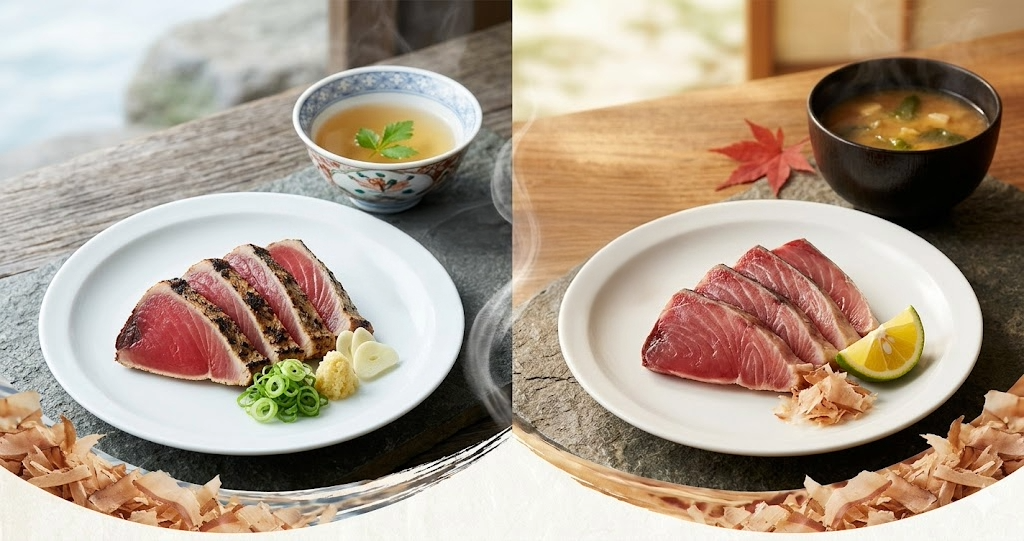
The Fish That Japan Follows Through the Year: Katsuo and the Meaning of Two Seasons No fish is more deeply embedded in the Japanese sense of season than katsuo — known in English as skipjack tuna or bonito — that arrives in spring as a lean harbinger of summer, and returns in autumn transformed, fat and rich, from i... -
The Craft of Soba: What the Ratio Reveals
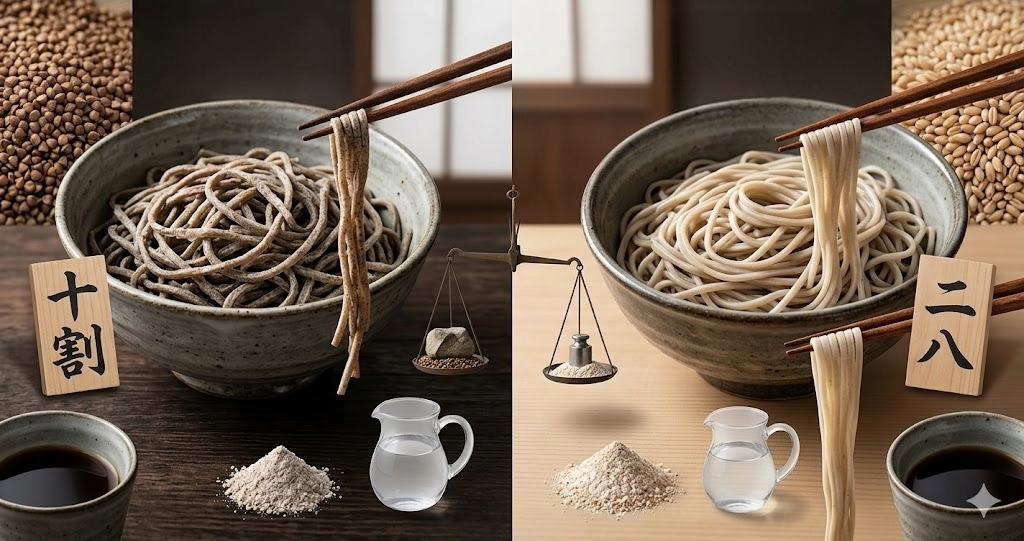
The Craft of Soba: What the Ratio Reveals A soba noodle is made from two things: buckwheat and water. The question is how much of each, and what that choice costs the craftsperson — and reveals to the person eating. There is a question that a serious soba shop must answer before it opens each morning: what ratio? Th... -
The Geography of Soba: How Place Shapes a Noodle
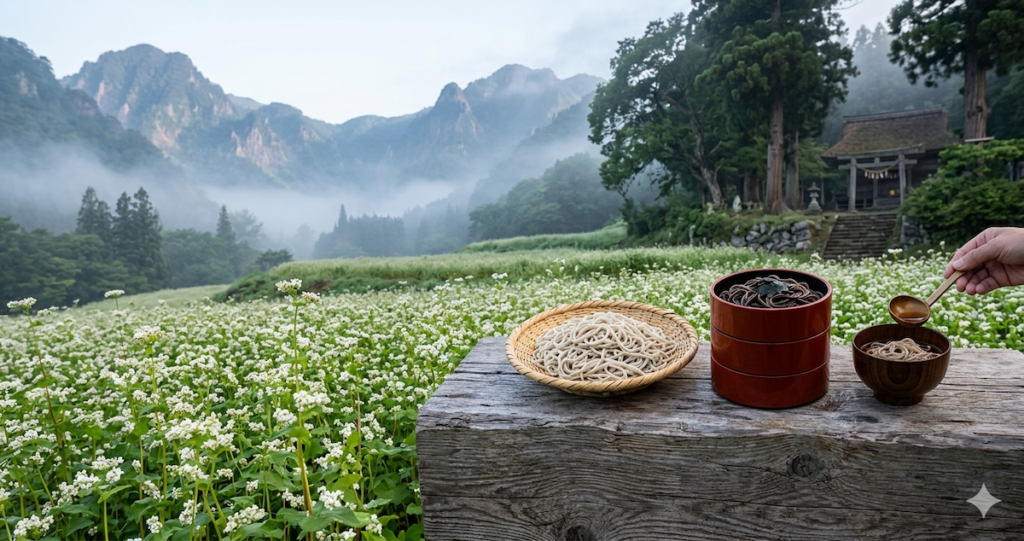
The Geography of Soba: How Place Shapes a Noodle Buckwheat grows where rice cannot — in cold highlands, volcanic soils, and mountain villages that have shaped some of Japan's most distinctive regional food cultures. To eat soba is to eat a landscape. Order a bowl of soba in Tokyo and you will receive something quite... -
Wagashi and the Calendar: A Year in Sweet Form
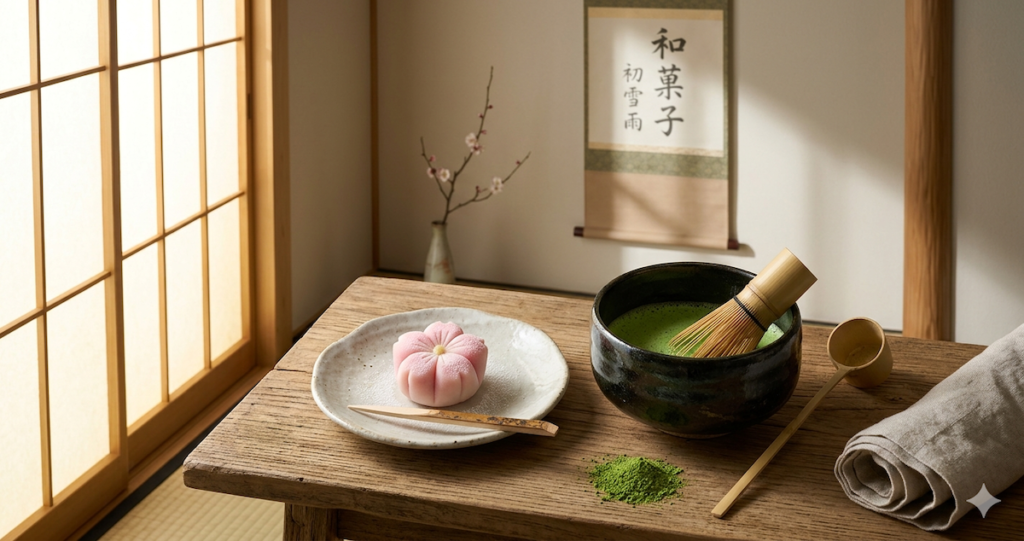
Wagashi and the Calendar: A Year in Sweet Form Before the matcha is prepared, a small sweet arrives. It is shaped like a plum blossom, or a maple leaf, or a crescent moon. It tells you, in the most delicate possible way, exactly what time of year it is. Place a piece of nerikiri in your hand and look at it carefully... -
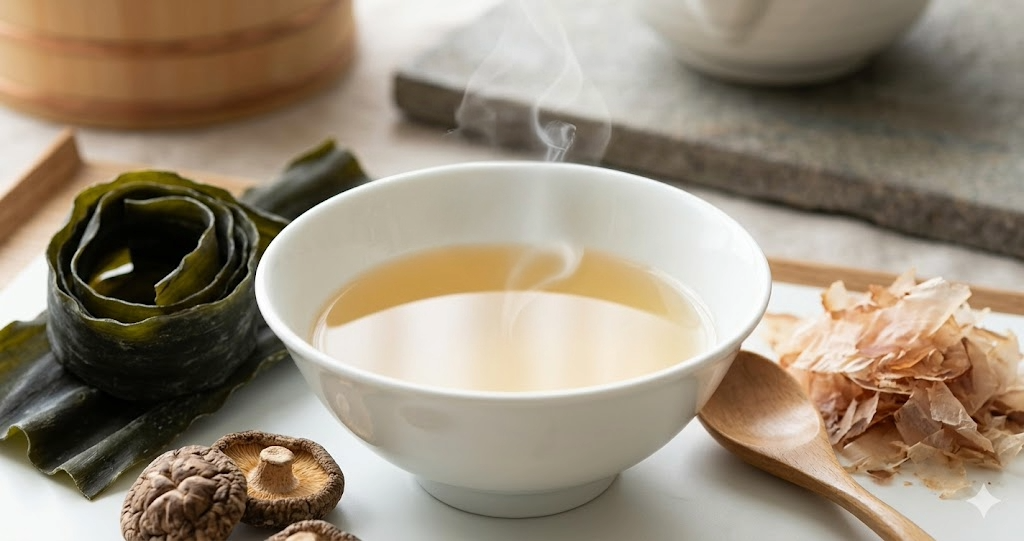
The Philosophy of Dashi: Japan’s Invisible Foundation
The Philosophy of Dashi: Japan's Invisible Foundation Japanese cooks do not make dashi. They draw it. That single verb — hiku, to pull — contains an entire philosophy of cooking, and an answer to why Japanese cuisine tastes the way it does. Set a bowl of good miso soup in front of someone who has never encountered J... -

Inside the Soy Sauce Barrel: Japan’s Most Patient Condiment
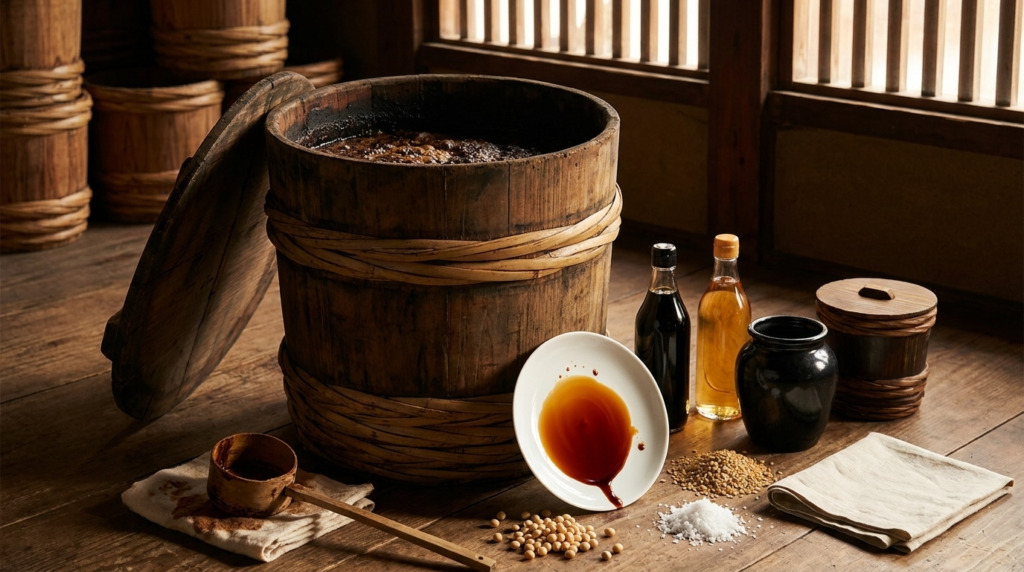
Inside the Soy Sauce Barrel: Japan's Most Patient Condiment Four ingredients. Two years. Hundreds of aromatic compounds. The story of Japanese soy sauce is a story about time — and about what happens when you give fermentation the space to do its work properly. Pour a few drops of good Japanese soy sauce onto a whit... -
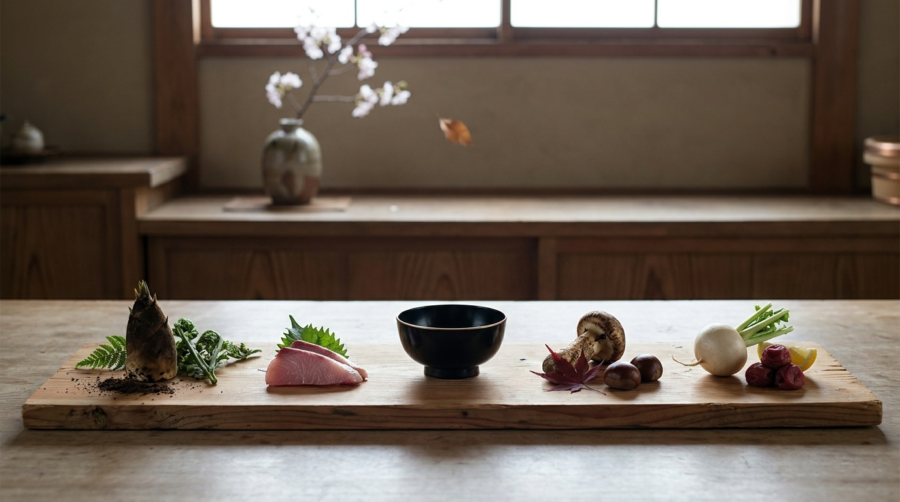
Shun: How Japan Learned to Eat by the Calendar
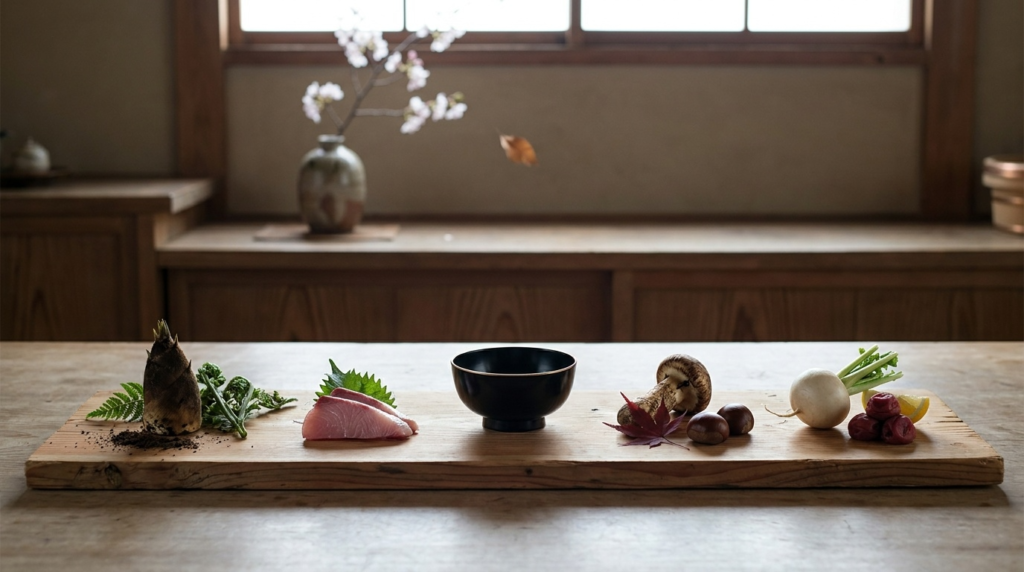
Shun: How Japan Learned to Eat by the Calendar Japan does not simply observe the four seasons. It counts them in twenty-four parts, and then seventy-two more. Behind this precision lies a philosophy of eating that has quietly shaped Japanese cuisine for over a thousand years. In Japan, the question of what to eat is... -
The Cold Waters of Hokkaido: Where Kombu Begins
The Cold Waters of Hokkaido: Where Kombu Begins Before the dashi, before the soup, before the dish — there is the sea. Japan's kombu culture begins in the cold currents off Hokkaido, where three distinct coastlines produce three entirely different flavors. Pull a strip of dried kombu from its wrapping and hold it up... -
How to Cook Rice Like It Matters
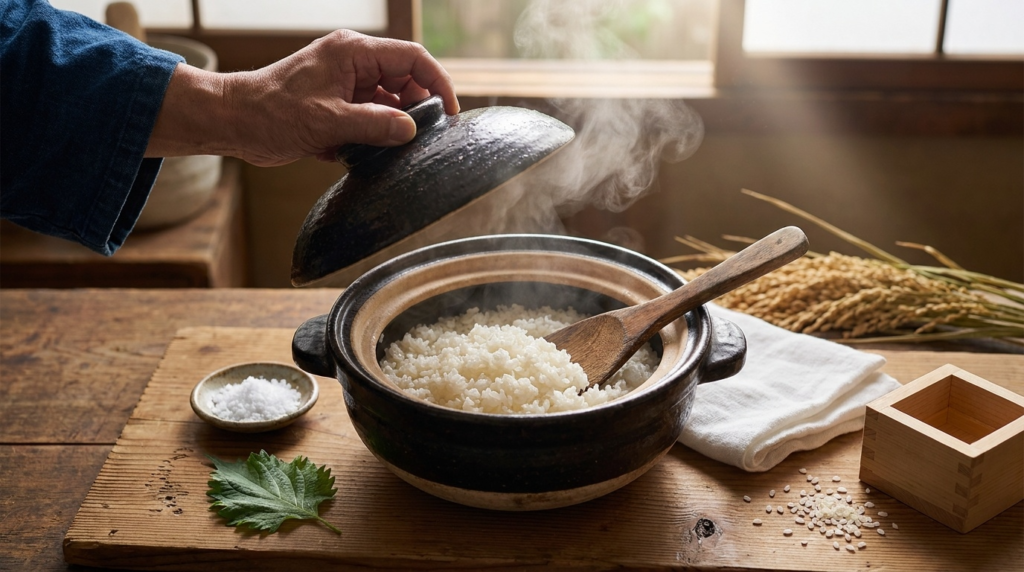
How to Cook Rice Like It Matters In Japan, rice is not a side dish. It is the center of the meal, the measure of a cook's attention, and a living expression of respect — for the ingredient, for the season, and for the people at the table. There is a Japanese word — gohan — that means both "cooked rice" and "meal." T... -
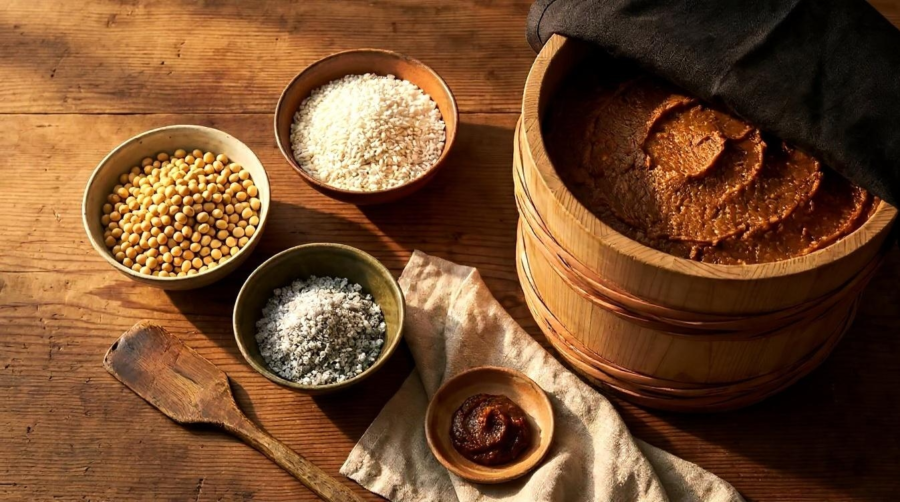
Soybeans, Salt, and Time: What Miso Is, and Why It Tastes the Way It Does
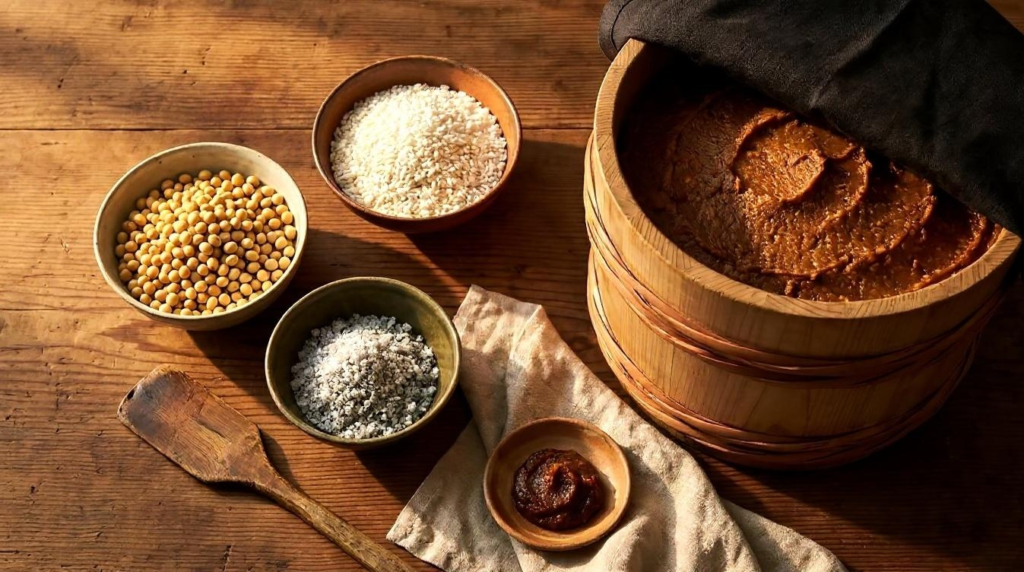
Soybeans, Salt, and Time: What Miso Is, and Why It Tastes the Way It Does Inside Japan's oldest pantry staple — the soybeans, the salt, the koji, and the months of patient transformation that make miso unlike anything else on earth. Open a tub of good miso and bring it close. Before you taste it, smell it. There is ...