Japanese food culture– tag –
-

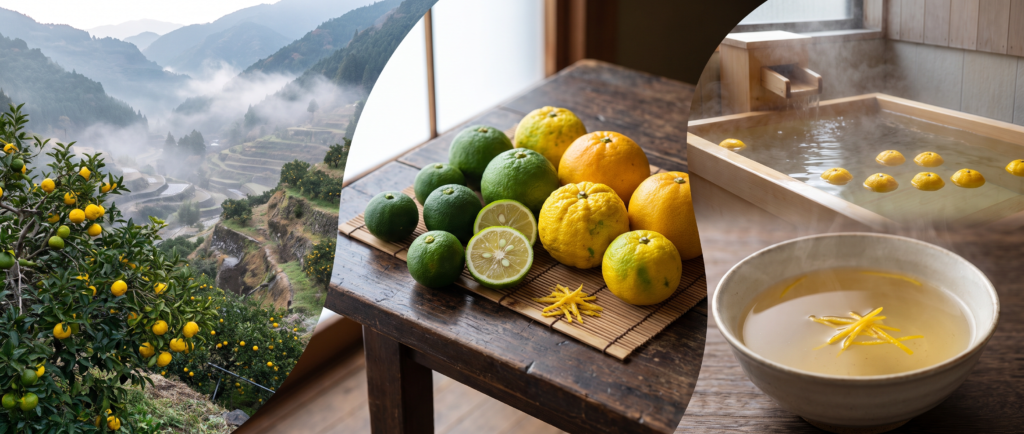
Yuzu and the Citrus That Refuses to Be a Fruit
Yuzu and the Citrus That Refuses to Be a Fruit No one bites into a yuzu. Japan's most beloved citrus is grown not to be eaten but to be smelled — its aromatic peel, its sharp cold-weather juice, and a family of green cousins that between them flavor an entire cuisine without ever appearing whole on the plate. Here i... -
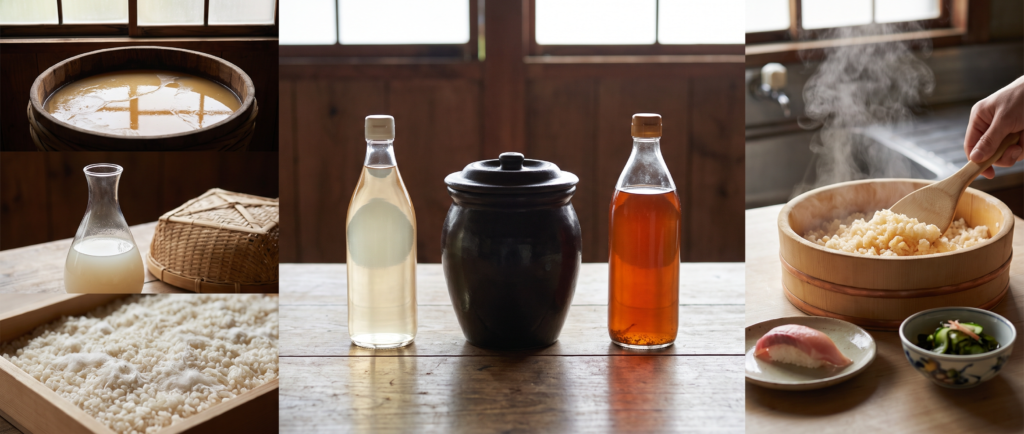
Rice Vinegar: The Sourness That Was Once Sake
Rice Vinegar: The Sourness That Was Once Sake Every bottle of Japanese rice vinegar is a wine that went the wrong way on purpose. Before it ever touches a grain of sushi rice, it is the end of two fermentations stacked on top of each other — and the quiet foundation beneath half the Japanese table. Pour a little int... -
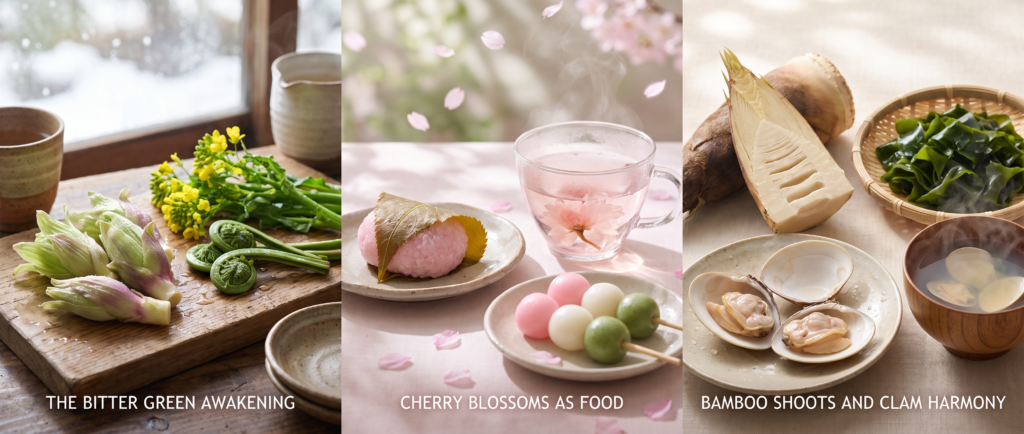
Spring on the Plate: Sakura, Bamboo Shoots, and the Taste of Beginnings
Spring on the Plate: Sakura, Bamboo Shoots, and the Taste of Beginnings Japanese spring food is built around a single idea — that a beginning has a flavor. It is faintly bitter, faintly sweet, wrapped in a salted leaf, and gone almost as soon as it arrives. Of all the seasons, spring is the one Japan seems most anxi... -
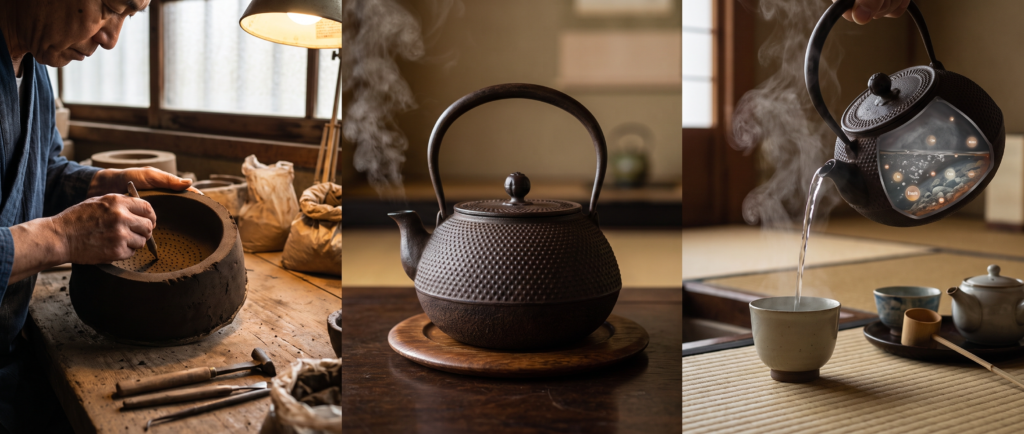
Nanbu Tekki: The Cast Iron That Changes the Water
Nanbu Tekki: The Cast Iron That Changes the Water Boil ordinary tap water in a Japanese iron kettle and it comes out tasting different — softer, rounder, cleaner. The reason is partly chemistry, partly four hundred years of a northern craft that treats a kettle as an heirloom. There is a claim that sounds like folkl... -
The Japanese Knife: Steel, Single Bevel, and the Soul of the Kitchen
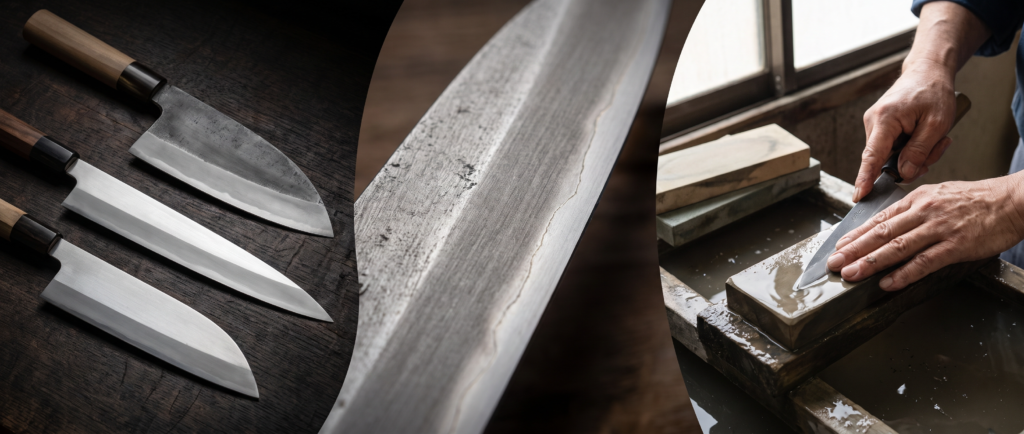
The Japanese Knife: Steel, Single Bevel, and the Soul of the Kitchen Two metals forged into one, an edge ground on a single side, and a back that is hollowed rather than flat — the traditional Japanese knife is built on ideas most Western blades never touch. Pick up a traditional Japanese kitchen knife and hold it t... -
Wasabi: The Plant That Almost No One Actually Eats
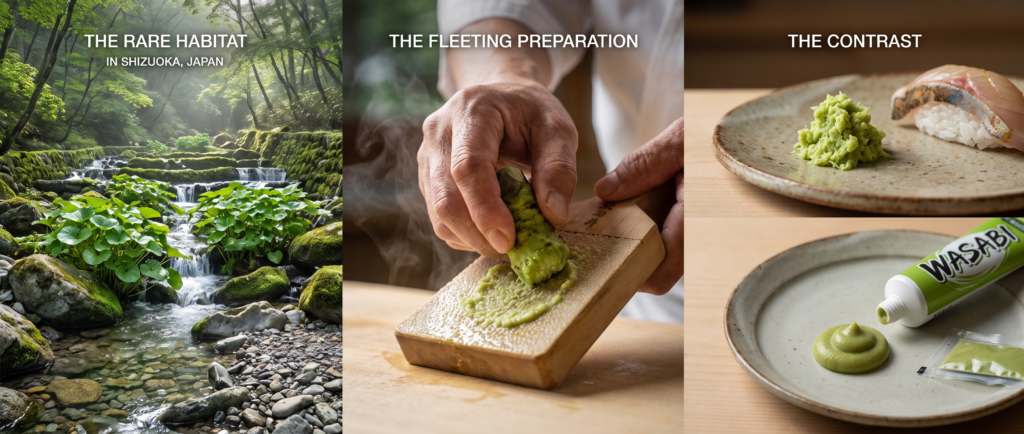
Wasabi: The Plant That Almost No One Actually Eats Real wasabi grows only in cold, running mountain water — which is why the green paste beside your sushi is, overwhelmingly, something else entirely. Here is an uncomfortable fact to begin with: the little green mound you have almost certainly eaten alongside sushi w... -
Shio Koji: The Fermented Seasoning That Quietly Rewired Modern Kitchens
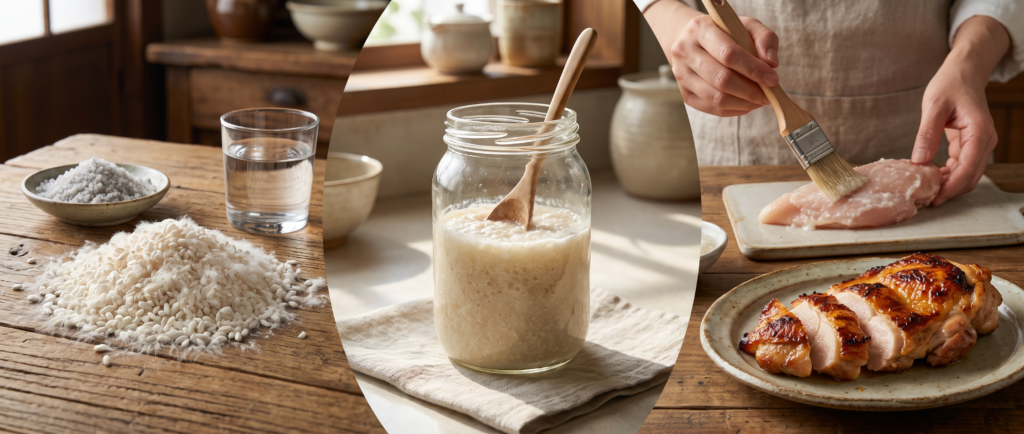
Shio Koji: The Fermented Seasoning That Quietly Rewired Modern Kitchens A cloudy paste of rice mold, salt, and water — old enough to predate refrigeration, new enough to sit on the pass at some of the best restaurants on earth. Spoon a little shio koji from the jar and it does not look like much. A pale, cloudy porr... -
A Year at the Japanese Table: Eating Through the Twenty-Four Sekki
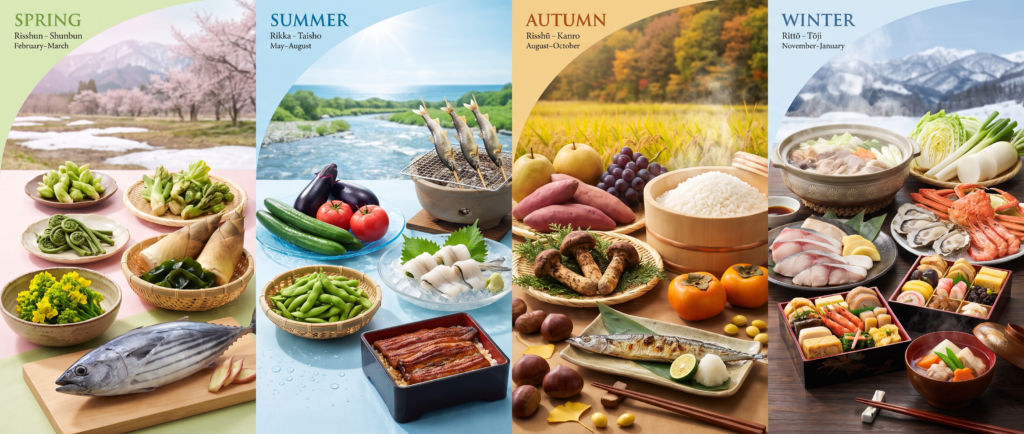
A Year at the Japanese Table: Eating Through the Twenty-Four Sekki Japan divides the year into twenty-four seasons, each about two weeks long. Walk through them in order and you are no longer reading a calendar — you are eating one. Most of the world eats by four seasons, and loosely at that. Japan keeps a finer clo... -
The Sap That Becomes an Heirloom: Urushi and the Long Life of Lacquer
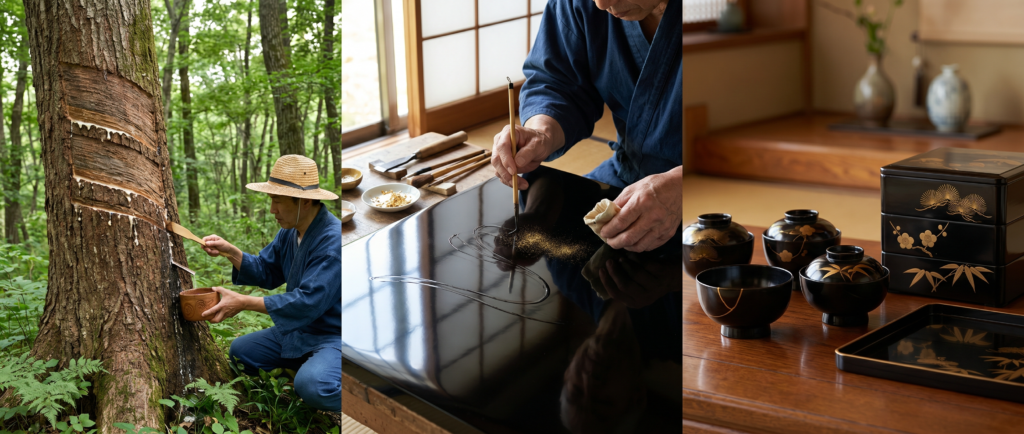
The Sap That Becomes an Heirloom: Urushi and the Long Life of Lacquer A tree bleeds a poisonous resin. A carver shapes wood. A painter draws in gold dust no thicker than pollen. And an object is made that is meant to outlive the person who made it — if the tree survives at all. There is a particular kind of object t... -
Katsuramuki: The Cut That Measures a Cook
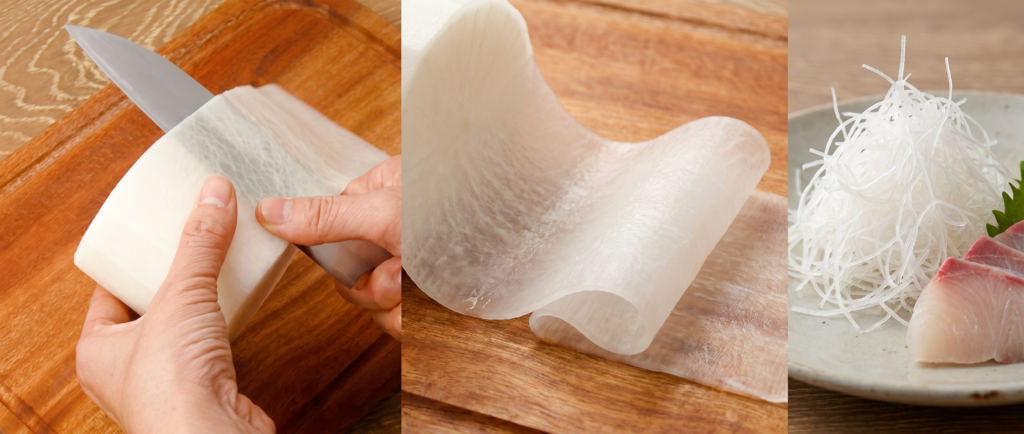
Katsuramuki: The Cut That Measures a Cook A single daikon, peeled into one continuous, paper-thin sheet longer than a person is tall. It sounds like a party trick. In a Japanese kitchen, it is closer to a verdict. Watch a trained Japanese cook perform katsuramuki and the first thing you notice is how little seems to... -
The Grain at the Center: How Rice Made Japan
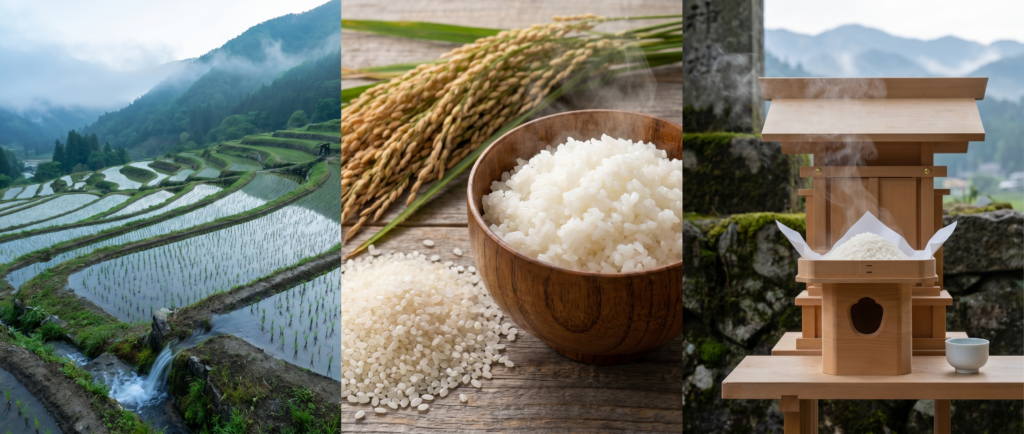
The Grain at the Center: How Rice Made Japan Before it was a food, rice was a reason to organize a landscape, a calendar, a religion, and a state. To understand Japan, you have to start in the flooded field. Fly over rural Japan in early summer and the country reveals its oldest logic from the air. Between the mount... -
The Sweetness That Fermentation Left Behind: Mirin as a Living Thing
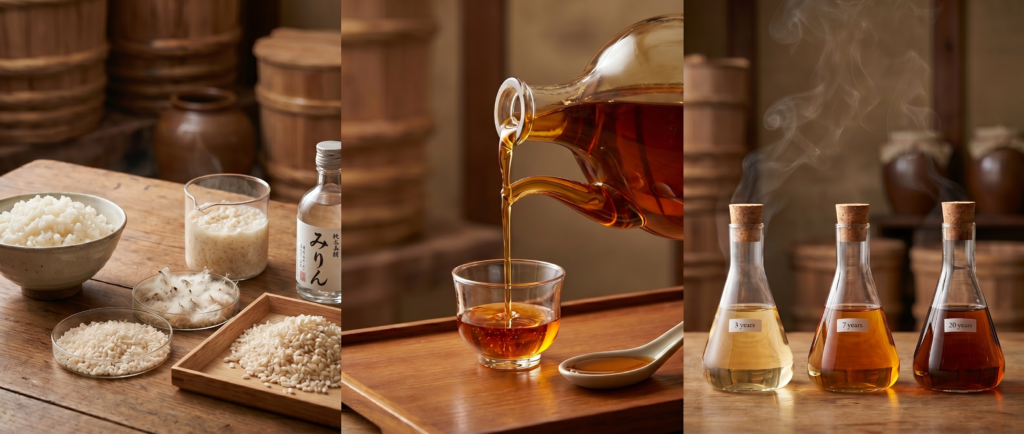
The Sweetness That Fermentation Left Behind: Mirin as a Living Thing Every other fermented staple in the Japanese kitchen is built by letting the microbes run their course. Mirin is the one that is built by stopping them halfway — a sweetness preserved rather than produced. There is a habit of mind that comes from c...