Waden– tag –
-

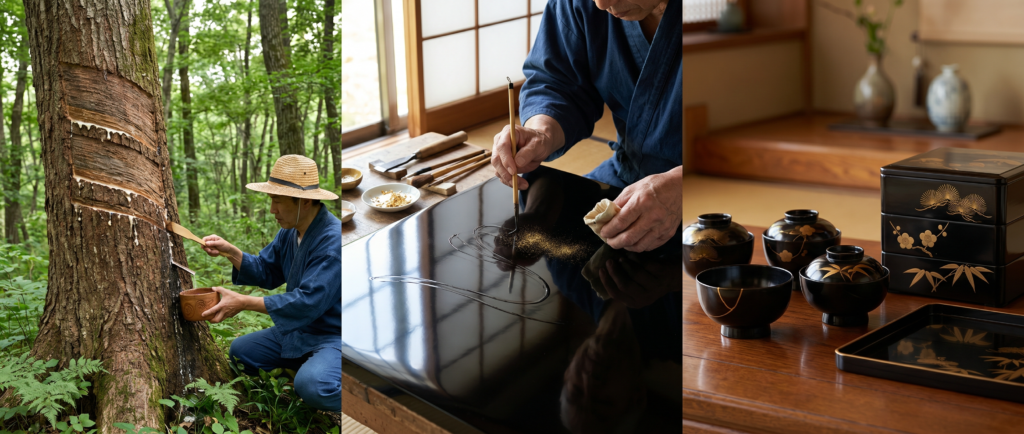
The Sap That Becomes an Heirloom: Urushi and the Long Life of Lacquer
The Sap That Becomes an Heirloom: Urushi and the Long Life of Lacquer A tree bleeds a poisonous resin. A carver shapes wood. A painter draws in gold dust no thicker than pollen. And an object is made that is meant to outlive the person who made it — if the tree survives at all. There is a particular kind of object t... -
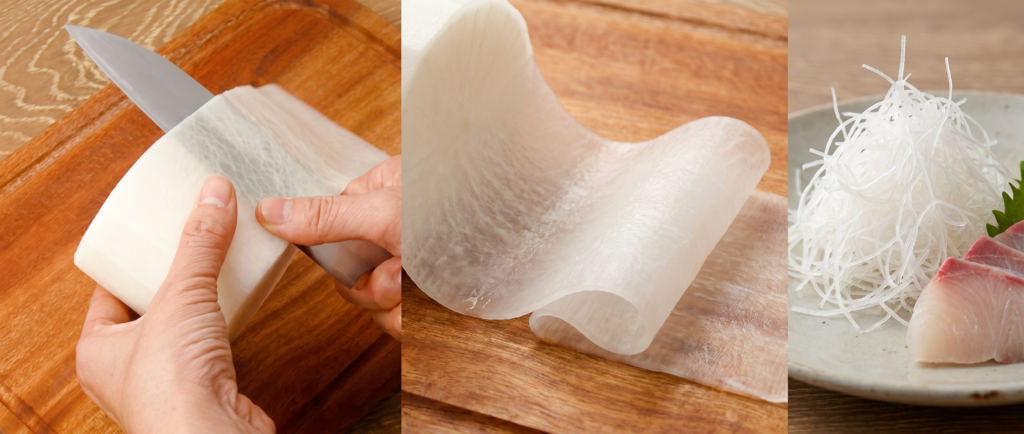
Katsuramuki: The Cut That Measures a Cook
Katsuramuki: The Cut That Measures a Cook A single daikon, peeled into one continuous, paper-thin sheet longer than a person is tall. It sounds like a party trick. In a Japanese kitchen, it is closer to a verdict. Watch a trained Japanese cook perform katsuramuki and the first thing you notice is how little seems to... -
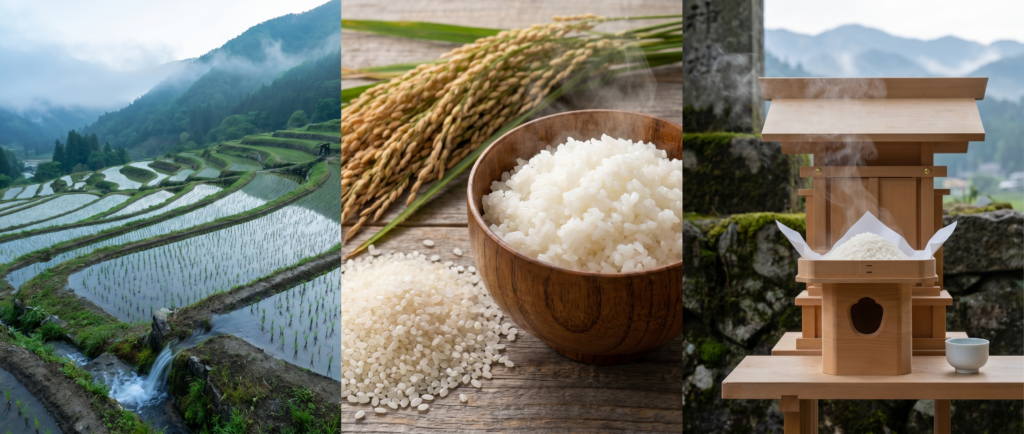
The Grain at the Center: How Rice Made Japan
The Grain at the Center: How Rice Made Japan Before it was a food, rice was a reason to organize a landscape, a calendar, a religion, and a state. To understand Japan, you have to start in the flooded field. Fly over rural Japan in early summer and the country reveals its oldest logic from the air. Between the mount... -
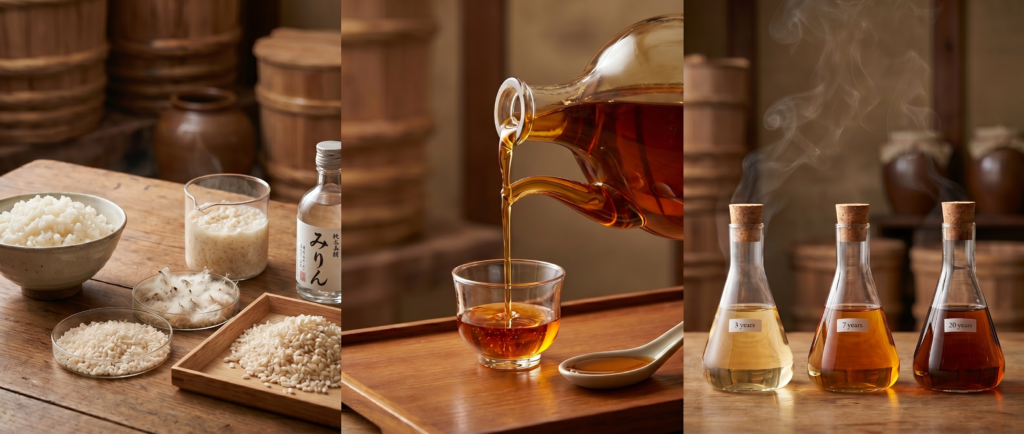
The Sweetness That Fermentation Left Behind: Mirin as a Living Thing
The Sweetness That Fermentation Left Behind: Mirin as a Living Thing Every other fermented staple in the Japanese kitchen is built by letting the microbes run their course. Mirin is the one that is built by stopping them halfway — a sweetness preserved rather than produced. There is a habit of mind that comes from c... -
The Box That Traveled: A History of the Japanese Bento
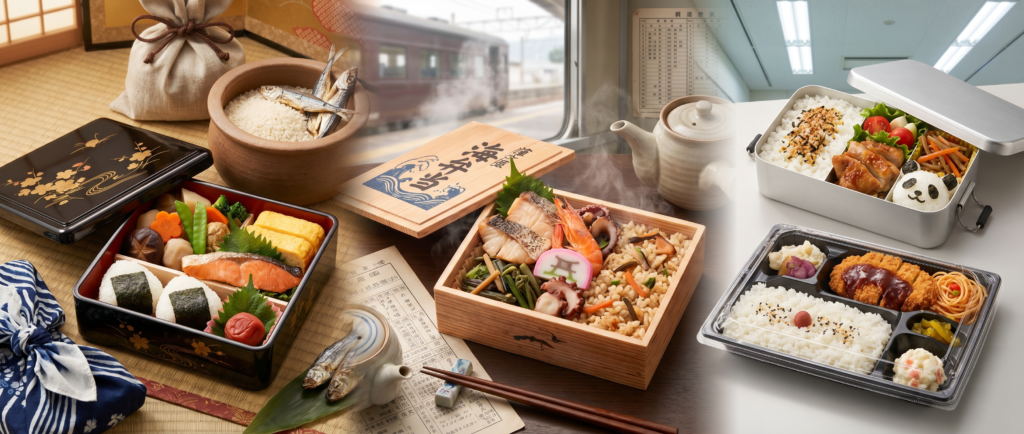
The Box That Traveled: A History of the Japanese Bento From dried rice carried into medieval battlefields to a convenience-store lunch and a rice ball shaped like a cartoon face, the bento is a thousand-year record of a single, quietly persistent idea: that a meal should be able to go with you. Almost every culture ... -
Frying as Restraint: Tempura and the Art of the Light Touch
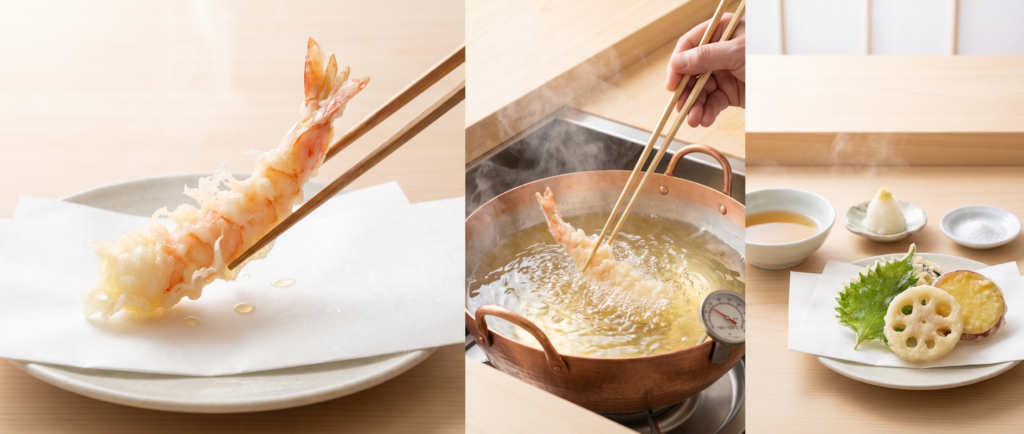
Frying as Restraint: Tempura and the Art of the Light Touch Deep-frying is usually an act of addition — batter, richness, weight. Japanese tempura is the opposite: a technique whose entire purpose is to take moisture away and leave the ingredient more itself than before. There is a moment, at a good tempura counter,... -
Types of Miso: White, Red & Awase Explained
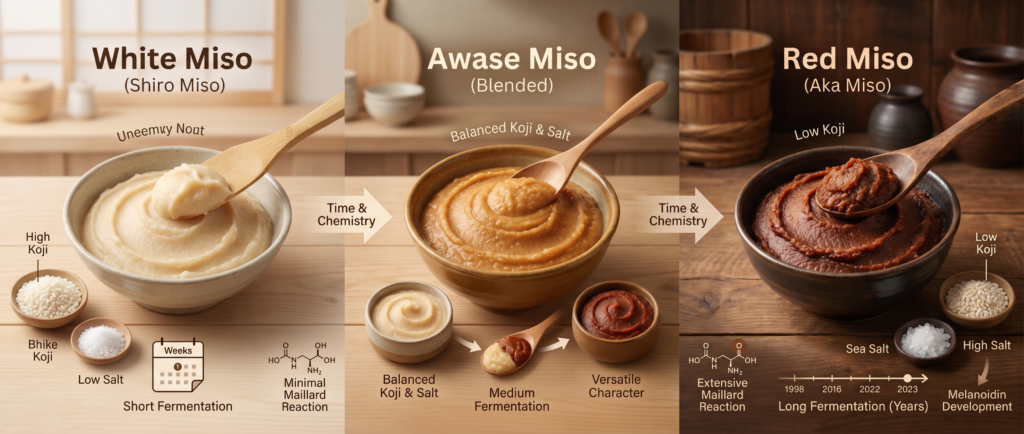
Types of Miso: White, Red & Awase Explained Everyone learns the shorthand: white miso is sweet, red miso is salty. It's true enough to be useful — and it explains nothing. The interesting question is why the same three ingredients divide into pale and dark, mild and deep, in the first place. Stand in front of th... -
The Noodle That Asks Nothing of You: Udon and the Comfort of Wheat
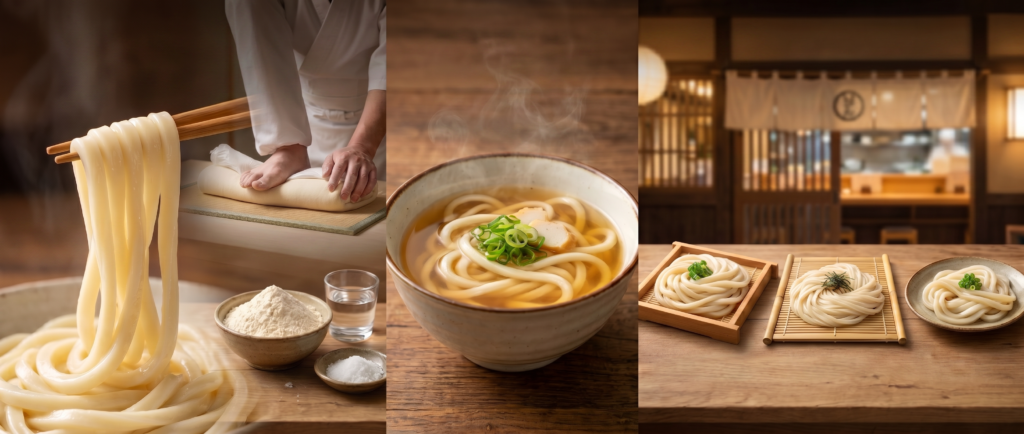
The Noodle That Asks Nothing of You: Udon and the Comfort of Wheat Soba is defined by what it lacks — gluten, and the difficulty that absence creates. Udon is defined by the opposite: gluten is its whole reason for being, and everything worth knowing about it flows from that one fact. There is a particular kind of c... -
Sushi vs Sashimi: What’s Actually the Difference?
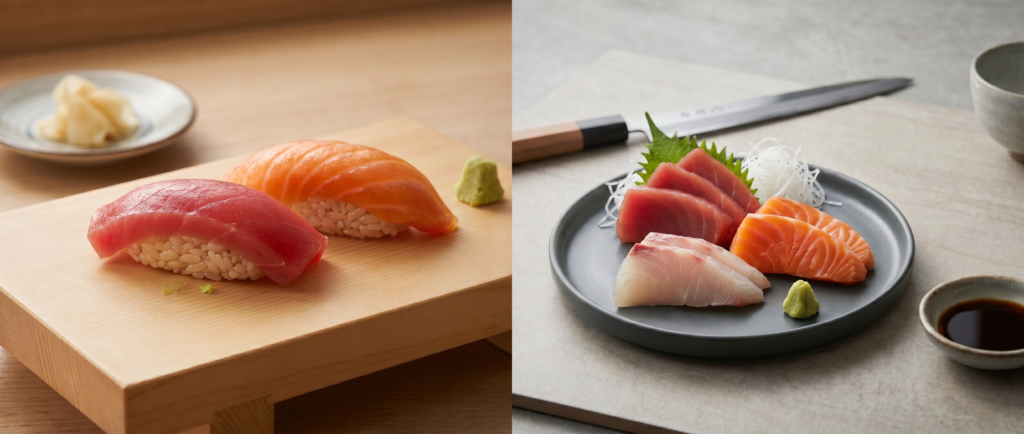
Sushi vs Sashimi: What's Actually the Difference? The short answer is one word: rice. But the more interesting question is why Japan gave a name — and the status of a complete dish — to something as apparently simple as a slice of raw fish. Ask ten people what the difference between sushi and sashimi is, and most wi... -
Sake for Beginners: How to Choose Your First Bottle
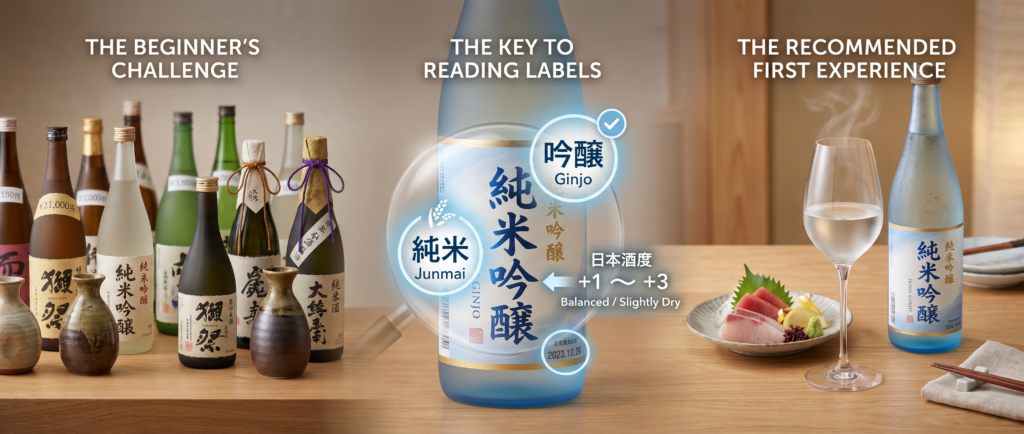
Sake for Beginners: How to Choose Your First Bottle The hardest part of drinking sake is not drinking it — it is standing in front of a shelf of unfamiliar bottles and having no idea where to begin. The good news is that a few simple ideas will take you most of the way there. There is a particular feeling that comes... -
How to Make Matcha: A Beginner’s Guide
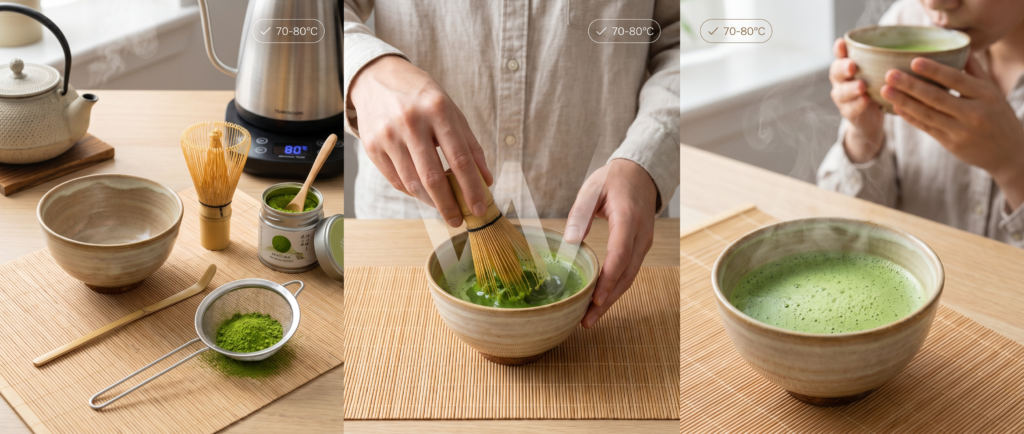
How to Make Matcha: A Beginner's Guide A good bowl of matcha takes about two minutes to make and almost nothing to get wrong — once you understand the three things that actually matter: the powder, the water, and the whisk. Making matcha can look intimidating from the outside. There is the special bowl, the bamboo w... -
How to Serve Sake: Temperature, Cups & Pairing
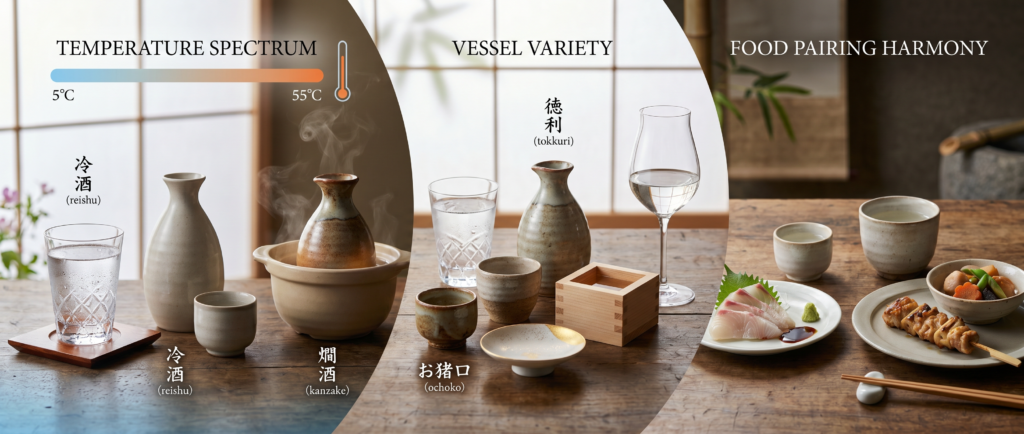
How to Serve Sake: Temperature, Cups & Pairing No other drink in the world is enjoyed across so wide a range of temperatures, in so many vessels, with so few fixed rules. To serve sake well is to make a series of small, deliberate choices — and each one changes what is in the glass. Most drinks have a correct se...